
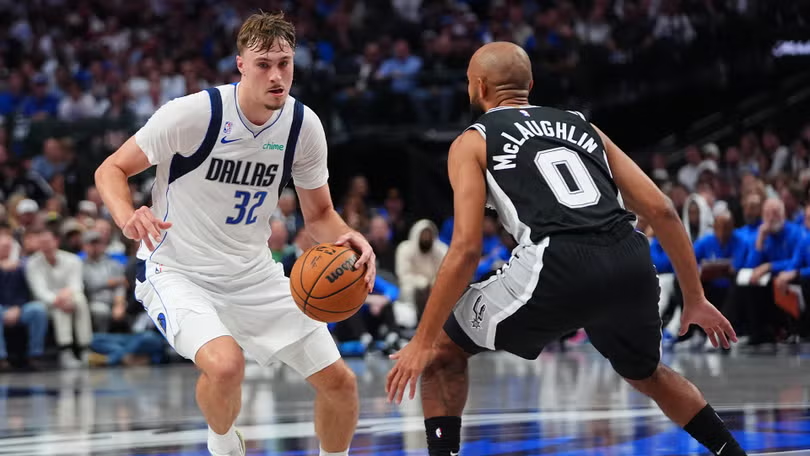
A bold but increasingly credible argument is gaining traction in basketball circles: a new American rookie may currently be a better fit for Team USA than LeBron James. This deep analysis explains how international basketball, FIBA rules, defensive versatility, role acceptance, and lineup efficiency could favor a next-generation star—without diminishing LeBron’s legendary impact.
Introduction: Why This Take Sounds Crazy — and Why It Isn’t
At first glance, the idea sounds absurd.
Suggesting that any rookie could be “better than” LeBron James for Team USA feels like basketball heresy. LeBron is not only one of the greatest players in NBA history—he is the face of American basketball dominance for an entire generation.
For nearly two decades, Team USA leaned on his size, vision, and leadership whenever international competition tightened. He was the safety valve, the stabilizer, the closer.
But basketball doesn’t stand still.
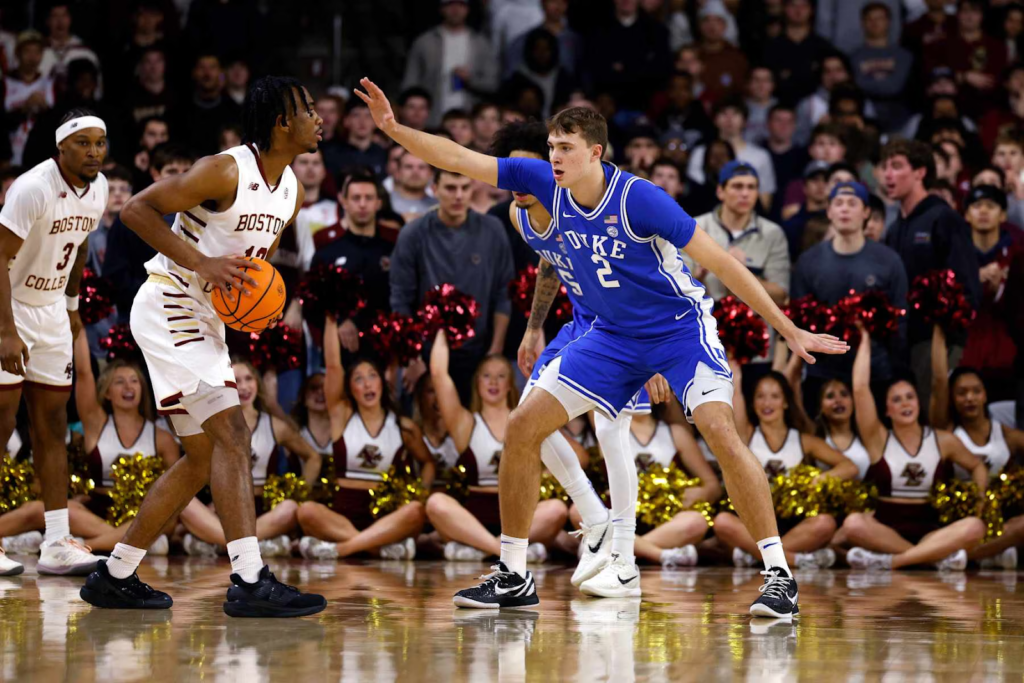
The international game has evolved. FIBA rules have exposed weaknesses that didn’t exist in the NBA game of the 2010s. And a new American rookie archetype—most commonly represented by Cooper Flagg—is emerging as something Team USA increasingly needs: a player who thrives without dominating the ball.
This is not an argument against LeBron’s greatness. It’s an argument about fit, timing, and modern international basketball realities.
What “Better for Team USA” Actually Means
Before emotions take over, one distinction must be crystal clear.
This discussion is not about:
- Career legacy
- Peak dominance
- Individual greatness
LeBron James remains untouchable in those categories.
Instead, this is about one very specific question that Team USA must answer every cycle:
Who gives us the best chance to win under FIBA rules with limited practice time?
When framed that way, the conversation changes dramatically.
Why International Basketball Changes the Entire Equation
FIBA Rules Create a Different Game
Under FIBA Basketball World Cup and Olympic rules, basketball becomes faster, tighter, and far less forgiving.
Key differences include:
- Smaller court dimensions
- Faster defensive rotations
- Greater physical contact allowed
- Less isolation freedom
- Continuous play with fewer stoppages
These conditions quietly reduce the value of ball-dominant creators and elevate players who can defend, move, and process quickly without the ball.
That environment favors a new type of star.
The Rookie Sensation Profile: Why It Translates So Well
Using Cooper Flagg as the primary example, the appeal isn’t hype—it’s translation.
Flagg’s projected Team USA value comes from how naturally his game fits international basketball. He impacts winning without needing the offense built around him.
His profile aligns with what Team USA increasingly prioritizes:
- Defensive versatility across multiple positions
- Elite off-ball instincts
- High-motor rebounding
- Quick, decisive passing
- Comfort playing within structure
These traits don’t dominate highlight reels—but they dominate possessions.
Where LeBron Still Excels (And Where the Gap Appears)
LeBron’s strengths remain undeniable:
- Elite court vision
- Strength mismatches
- Game-controlling tempo
- Leadership in pressure moments
However, international basketball exposes trade-offs:
- Slower defensive recoveries
- Heavy ball reliance
- Reduced off-ball scoring
- Opponents loading defenses early
At 40+, even slight defensive limitations become targetable under FIBA rules.
This isn’t criticism—it’s the natural reality of time and context.
Defense: The Currency That Wins International Games
Team USA’s recent struggles have not been about scoring.
They’ve been about defensive breakdowns.
International teams relentlessly hunt mismatches. Guards and wings who can’t switch, recover, and rotate instantly are exposed possession after possession.
Here’s where rookies often gain an edge:
- Younger legs
- Faster lateral movement
- No hesitation guarding anyone
- Higher defensive motor
In FIBA play, one defensive lapse can swing an entire tournament.
Role Acceptance: The Skill Nobody Talks About
One of the hardest adjustments for legendary players is accepting less.
On Team USA:
- Minutes fluctuate
- Usage drops
- Shots aren’t guaranteed
- Defense earns trust faster than offense
Younger players arrive expecting a role. Veterans arrive having earned freedom.
That psychological difference matters in short tournaments with no margin for error.
Coaching Reality: Why Simpler Players Are Easier to Trust
From a coaching standpoint, rookie-profile players offer:
- Fewer schematic compromises
- More lineup flexibility
- Faster chemistry development
- Greater willingness to adapt
With limited practice time, coaches value players who require fewer adjustments.
This quietly tilts the scale toward youth.
Real-World Precedents Support This Shift
This wouldn’t be unprecedented.
Past Team USA cycles show:
- Younger wings closing games
- Defensive specialists finishing tournaments
- Veterans deferring to energy players
International success repeatedly rewards adaptability over reputation.
This Debate Is Really About Timeline, Not Talent
LeBron at his peak? Untouchable.
LeBron today versus a switchable, high-motor rookie in specific international matchups? That conversation is real—and happening quietly.
Team USA isn’t choosing greatness. It’s choosing optimization.
Why This Rookie Might Be Better For Team USA Right Now
- More defensive versatility
- Less ball dominance required
- Faster adaptation to FIBA spacing
- Higher stamina across rotations
- Cleaner fit next to other stars
This isn’t about replacing LeBron. It’s about evolving beyond one-player solutions.
What This Means for Team USA’s Future
Team USA is transitioning from:
“Give the ball to our best player”
to
“Build the most adaptable five.”
That evolution favors younger, positionless, defensively elite players.
The rookie sensation represents where international basketball is headed—not a rejection of the past.
Key Takeaways (Quick Read)
- “Better” means fit, not legacy
- Defense and adaptability win internationally
- Rookies often outperform stars in short tournaments
- LeBron’s greatness remains unquestioned
- Team USA’s future is versatility-driven
Frequently Asked Questions (FAQ)
1. Is this rookie actually better than LeBron James?
Ans. No in terms of career or legacy—but he may be a better fit for modern Team USA needs.
2. Why does Team USA value defense more now?
Ans. FIBA rules expose defensive weaknesses faster than the NBA game.
3. Who is the rookie sensation being discussed?
Ans. Cooper Flagg is the most common example of this new Team USA archetype.
4. Is LeBron done with Team USA?
Ans. No. He remains a valuable leader and situational weapon.
5. Why does off-ball play matter internationally?
Ans. Because spacing is tighter and defenses collapse quicker.
6. Do younger players really outperform stars in FIBA play?
Ans. Often, yes—especially in defense and energy roles.
7. Would fans accept LeBron in a reduced role?
Ans. That’s more a cultural challenge than a basketball one.
8. Is Team USA moving away from superstar reliance?
Ans. Yes. The trend favors depth, versatility, and chemistry.
9. Has this transition already started?
Ans. Quietly, yes—recent roster decisions suggest it.
10. What does this mean for future Olympic teams?
Ans. Expect younger, more flexible lineups with fewer guaranteed stars.
Final Thoughts
Saying a rookie might be “better than LeBron for Team USA” isn’t disrespect—it’s context.
Basketball evolves. Rules evolve. Needs evolve.
LeBron James defined an era of dominance. The next era may belong to players who dominate without dominating the ball.
And for modern Team USA, that might matter more than anything.