
 By Jonathan Reed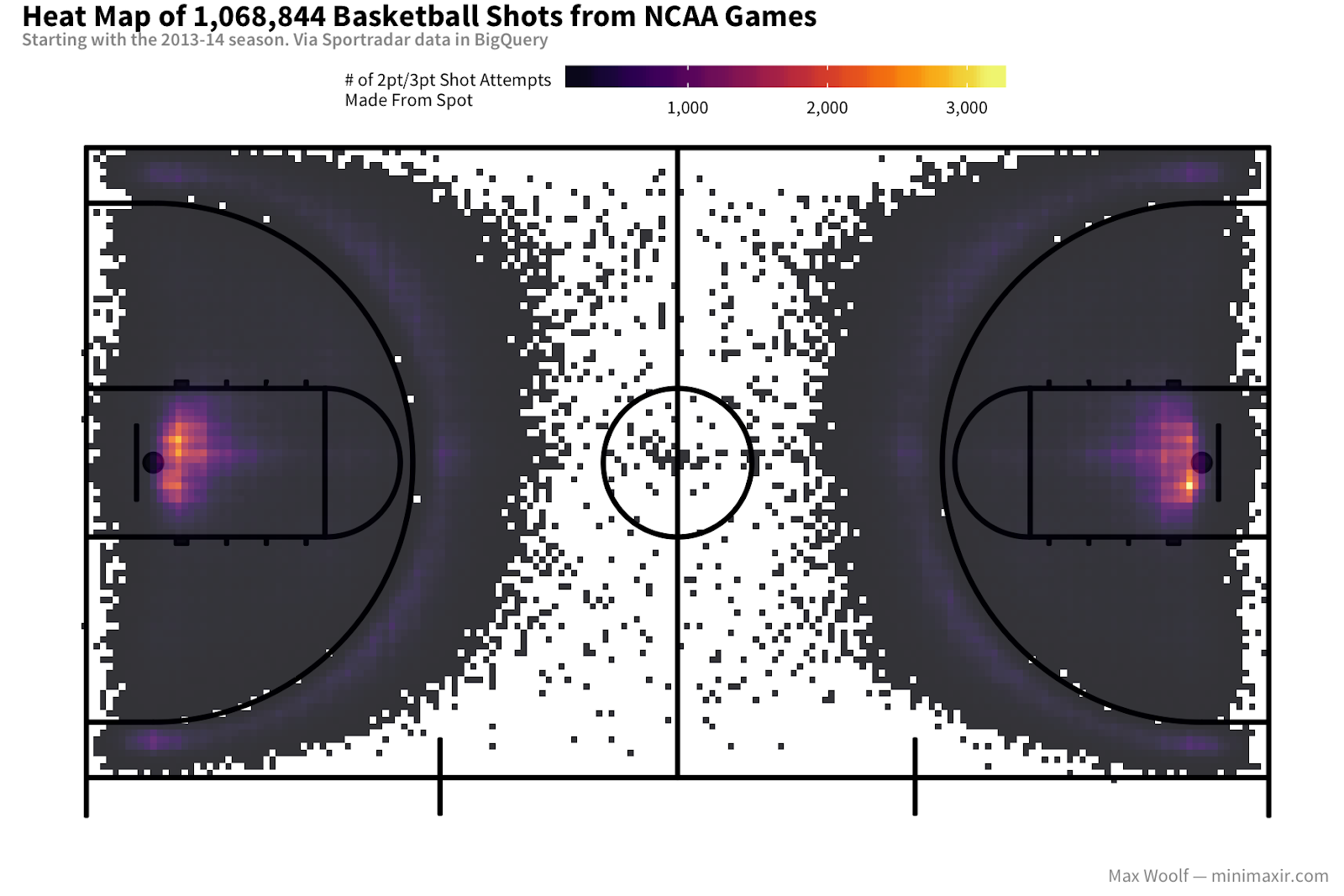
For more than a decade, the three-point shot dominated basketball strategy. But new analytics, playoff trends, and defensive evolution reveal a surprising shift: threes alone no longer guarantee winning. This in-depth analysis explores the shocking data behind declining three-point dominance, the quiet return of the mid-range, and why balanced, adaptable offenses are now outperforming one-dimensional shooting teams.
Introduction: The Shot That Once Ruled Basketball
For years, basketball lived by a simple truth: three is greater than two.
That idea reshaped the sport at every level—from youth gyms to NBA arenas, college programs, and even international systems connected to USA Basketball. Coaches eliminated long twos, stretched the floor, and encouraged shooters to fire without hesitation. Analytics-backed models proved that spacing and three-point volume produced better offensive efficiency.
It wasn’t a fad. It was a revolution.
But revolutions don’t last forever in their purest form.
Quietly, subtly, and statistically, something has changed. The numbers no longer say the three-point shot is king by itself. The most shocking analytics today don’t argue against threes—they argue against overreliance.
Why Are Fans Asking: “Is the Three-Point Era Ending?”
Across search engines and sports forums, fans are asking sharper questions than ever:
- Are teams shooting too many threes?
- Why do playoff games feel different?
- Is the mid-range shot coming back?
- Are defenses finally solving the three-point revolution?
These questions aren’t nostalgic complaints. They’re pattern recognition.
Fans are noticing that the edge once created by three-point shooting has narrowed. The gap between “smart basketball” and “predictable basketball” is shrinking—and analytics are starting to confirm it.
How the Three-Point Shot Became King in the First Place
The rise of the three-point shot wasn’t hype-driven—it was mathematically undeniable.
Analytics showed:
- An average three-point attempt yielded more points per possession than a mid-range jumper
- Floor spacing improved ball movement and driving lanes
- Defensive rotations broke down under shooting pressure
Teams that embraced high-volume three-point shooting gained a consistent advantage. This philosophy spread rapidly, becoming the default blueprint for modern offense.
For a time, the numbers were overwhelming.
The First Cracks in the Crown
Success breeds imitation—and imitation breeds adaptation.
As nearly every team adopted three-heavy offenses, defenses evolved specifically to counter them. Switch-heavy schemes, longer defenders, smarter closeouts, and data-backed scouting reports changed the landscape.
The three-point shot didn’t lose value—but it lost surprise.
Analytics didn’t fail. The ecosystem changed.
Shocking Analytics #1: Three-Point Efficiency Has Plateaued
League-wide data shows something unexpected: while three-point attempts continue to rise, three-point accuracy has largely stagnated.
This matters.
When volume increases without a proportional rise in efficiency:
- Marginal returns decline
- Missed shots increase variance
- Offensive flow becomes streak-dependent
The three-point advantage was never about volume alone—it was about quality. As shot quality declines under pressure, so does expected value.
Shocking Analytics #2: Playoff Basketball Exposes the Truth
The postseason is basketball’s stress test.
In playoff environments:
- Defenses are more disciplined
- Matchups are targeted relentlessly
- Weak shooters are hunted
Historical playoff data consistently shows that three-point volume drops while mid-range efficiency rises.
Why?
- Defenses aggressively take away threes
- Spacing collapses
- Stars are forced to score from intermediate zones
Under playoff pressure, versatility beats ideology.
The Quiet Return of the Mid-Range Shot
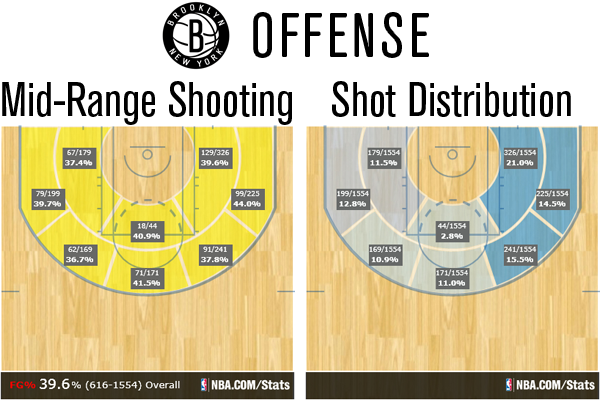
Once labeled inefficient, the mid-range shot has returned—not because of nostalgia, but necessity.
Elite scorers are exploiting:
- Overplayed perimeter defenses
- Switch mismatches
- Drop coverage gaps
These shots aren’t low-percentage bailouts anymore. For the right players, they are high-value counters.
Analytics didn’t abandon the mid-range. They contextualized it.
Why Defenses Are Winning the Three-Point Battle
Defensive analytics caught up.
Modern teams track:
- Shooter release times
- Preferred shooting pockets
- Fatigue patterns
- Passing angles leading to threes
The result is fewer clean looks. The three-point shot hasn’t disappeared—it’s just harder than ever to execute efficiently.
Real-Life Pattern Fans Keep Seeing
Fans recognize the scenario instantly:
- A team launches 40+ threes
- Shoots poorly
- Has no secondary scoring plan
- Loses decisively
“Live by the three” once meant explosive upside. Now it often means catastrophic downside.
New analytics show that balanced shot profiles reduce volatility, especially against elite defenses.
Shocking Analytics #3: Shot Diversity Correlates With Winning
Recent team-level studies reveal a surprising trend: teams that score efficiently from multiple zones perform better in late-game situations.
Why?
- Defenses can’t overcommit
- Adjustments become harder
- Offensive predictability disappears
Basketball is rediscovering an old truth through new data: variety is a weapon.
What the New Analytics Actually Say (And What They Don’t)
Analytics are not declaring the death of the three-point shot.
They are saying:
- Threes alone aren’t enough
- Context matters more than raw volume
- Efficiency is situational
The future of offense isn’t anti-three—it’s anti-monotony.
Why Fans Sense the Shift Before Headlines Do
Fans don’t read spreadsheets—but they feel momentum.
They notice:
- Stars closing games inside the arc
- Defenses daring teams into predictable shots
- Playoff series decided by versatility
The eye test is catching up to the data.
What This Means for Coaches and Teams
The smartest teams are already adapting.
They emphasize:
- Shot quality over shot location
- Matchup exploitation
- Counters for defensive overcommitment
Analytics departments aren’t shrinking—they’re evolving.
Practical Takeaways for Players, Coaches, and Fans
- The best shot is the one defenses can’t anticipate
- Three-point shooting remains vital—but not exclusive
- Mid-range efficiency is a competitive edge again
- Balance beats blind optimization
Basketball strategy isn’t reversing—it’s maturing.
Frequently Asked Questions (Trending Search Queries)
1. Is the three-point shot becoming less effective?
Ans. Its efficiency advantage has narrowed as defenses adapt.
2. Are teams shooting too many threes now?
Ans. Some teams rely too heavily on volume without maintaining shot quality.
3. Is the mid-range shot actually back?
Ans. Yes, particularly in playoff and late-game contexts.
4. Do analytics now favor mid-range scoring?
Ans. Analytics favor contextual efficiency, not specific shot zones.
5. Why do playoff games look different from the regular season?
Ans. Defensive intensity and game planning increase dramatically.
6. Is “live by the three” still a winning strategy?
Ans. It’s riskier than before, especially against elite defenses.
7. Are defenses better now than in past eras?
Ans. Yes. Defensive analytics and switching schemes have improved significantly.
8. Does this mean basketball is going backward?
Ans. No. It’s evolving toward balance and adaptability.
9. Will three-point volume eventually decline?
Ans. It may stabilize, but threes will remain essential.
10. What does the future of shot selection look like?
Ans. Versatility, unpredictability, and situational intelligence.
Final Verdict: The Three-Point Shot Isn’t Dead—It’s No Longer Alone
The three-point revolution didn’t fail.
It succeeded so thoroughly that defenses caught up.
Basketball is now entering its next phase—one where analytics no longer crown a single shot king, but reward balance, adaptability, and feel.
The most shocking analytics don’t say threes are obsolete.
They say winning has evolved again.