
 By Jonathan Reed
The most controversial moment in Olympic basketball history occurred during the 1972 Munich Olympic final, when disputed officiating and political pressure overturned what appeared to be a U.S. victory. This long-form investigative article revisits the scandal, explains why it was quietly buried, and explores how it reshaped Olympic basketball governance, trust, and global perception for decades.
Introduction: The Night Olympic Basketball Lost Its Credibility
The Olympic Games are built on a promise: that sport, at its highest level, transcends politics, corruption, and favoritism. For decades, basketball fans believed that promise held true on the Olympic stage. Wins and losses were accepted as the outcome of effort, skill, and preparation.
That belief changed forever in 1972.
What happened during the men’s basketball gold-medal game at the Munich Olympics is still considered the single most controversial finish in Olympic basketball history. It was not just a questionable call or a missed whistle—it was a sequence of events so extraordinary that many believe the truth was intentionally buried to protect global sporting institutions during a tense political era.
This article presents a complete, well-researched, and human-centered account of the Olympic basketball scandal that was covered up, examining what really happened, why accountability never followed, and why American fans continue to care more than 50 years later.
Setting the Stage: Why the 1972 Olympic Basketball Final Was So Important
To understand the scandal, you must first understand what was at stake.
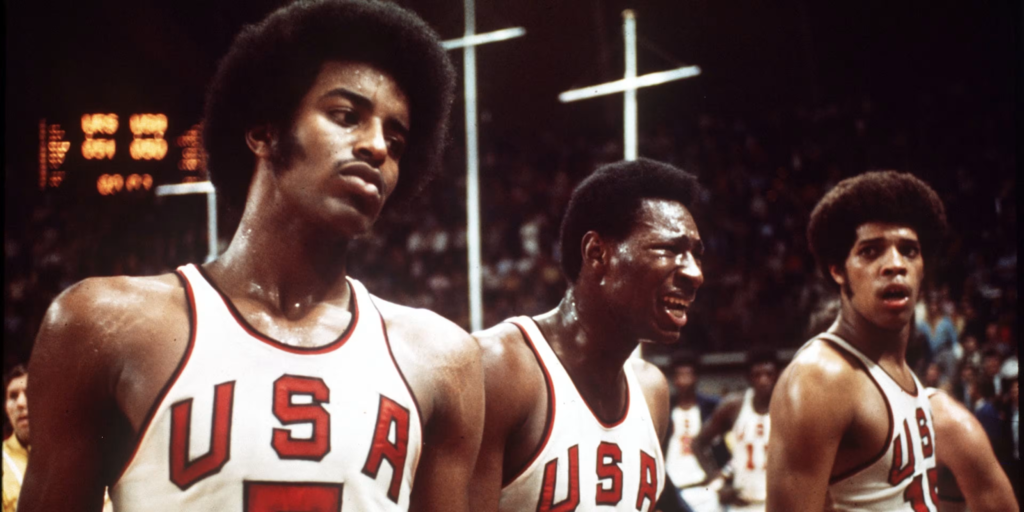
Before 1972, the United States men’s basketball team had never lost an Olympic game. Since basketball debuted at the Olympics in 1936, Team USA had won every gold medal, often by overwhelming margins. The players were amateurs—mostly college athletes—but the dominance was absolute.
The Soviet Union, meanwhile, viewed Olympic success as a political weapon during the Cold War. Victories were not just athletic achievements; they were ideological statements. Basketball had become another arena where global power dynamics played out in front of millions.
By the time the U.S. and USSR met in the gold-medal game in Munich, the matchup symbolized far more than sport. It was democracy versus communism, tradition versus disruption, and legacy versus ambition.
What Actually Happened in the Final Seconds of the Game
The game itself was intense, physical, and closely contested. Neither team led comfortably, and emotions ran high throughout the contest.
With just seconds remaining, the United States scored to take a one-point lead with three seconds left. Under normal circumstances, the game should have ended moments later with a U.S. victory.
Instead, chaos unfolded.
The controversial sequence included:
- Confusion over whether the Soviet bench had properly called a timeout
- Officials stopping play after the clock had already resumed
- The game clock being reset—not once, but twice
- A third inbound attempt that led to the Soviet Union scoring the winning basket
When the final buzzer sounded, the scoreboard declared the Soviet Union Olympic champions.
To American players, coaches, and many neutral observers, the ending defied logic, procedure, and fairness.
Why This Moment Became an Olympic Scandal—Not Just a Bad Call
Bad officiating happens in every sport. What made this different was everything that followed.
The U.S. team immediately filed a formal protest, arguing that:
- Rules were misapplied retroactively
- Officials exceeded their authority
- The clock manipulation violated established procedures
The appeal was reviewed by Olympic authorities—and rejected.
No replay was ordered. No rematch was scheduled. No transparent explanation was publicly provided.
Instead, the result was finalized, and the event moved on as if nothing extraordinary had occurred.
This silence is why many historians describe the incident not as a mistake, but as a covered-up scandal.
The Role of Olympic and Basketball Governing Bodies
At the time, Olympic basketball was governed by FIBA, operating within the authority of the International Olympic Committee.
The geopolitical context mattered deeply:
- The Cold War was at its peak
- The Munich Games were already overshadowed by tragedy
- International unity was a top priority for organizers
Acknowledging wrongdoing in the gold-medal game would have risked:
- Diplomatic backlash
- Institutional embarrassment
- Questions about the legitimacy of Olympic governance
So the easiest path was chosen: finality without accountability.
The Silent Protest: Why the U.S. Team Refused Their Silver Medals
Perhaps the most powerful response came from the players themselves.
When the silver medals were presented, the U.S. team refused to accept them. That decision was not symbolic theater—it was a lifelong stand.
To this day:
- Those medals remain unclaimed
- Several players have requested they never be accepted, even posthumously
- Families have upheld that stance across generations
For the athletes involved, the issue was never about silver versus gold. It was about legitimacy. Accepting the medals would have implied agreement with a process they believed was fundamentally unjust.
The Human Cost of the Covered-Up Scandal
Lost beneath the headlines is the emotional toll the scandal took on real people.
Former players have spoken about:
- Feeling dismissed by international authorities
- Carrying resentment for decades
- Losing trust in Olympic ideals
Unlike professional leagues, these athletes had no appeals court, no union leverage, and no financial safety net. Their Olympic moment—often the pinnacle of an amateur career—was defined by controversy instead of celebration.
That personal cost is rarely acknowledged in official Olympic histories.
Why the Scandal Was Never Reopened or Corrected
A common question among fans is simple: Why not fix it?
The reality is more complicated.
Key reasons the case was never revisited:
- The Olympics lack a mechanism to reverse completed events
- Admitting error would weaken institutional authority
- Precedent fears could invite countless appeals
- Political neutrality was prioritized over historical correction
Rather than confront the past, Olympic leadership chose to let time bury the controversy.
How the 1972 Scandal Quietly Changed Olympic Basketball
Ironically, the scandal led to meaningful reforms—without public acknowledgment.
Over the years:
- Timing and clock-management rules were clarified
- Officiating authority was more clearly defined
- Replay and administrative oversight improved
The sport became fairer and more transparent, but the origin of those changes was rarely discussed openly.
Progress came—but accountability did not.
Why This Scandal Still Matters to American Fans Today
For U.S. audiences, the 1972 final represents a loss of innocence.
It revealed that:
- Sports can be influenced by politics
- Governing bodies are not immune to pressure
- Fair play is not guaranteed by tradition alone
Understanding this history adds depth to modern Olympic basketball, where NBA stars now dominate and scrutiny is far greater.
The lesson is clear: trust in sport must be earned, not assumed.
Key Takeaways: What the Covered-Up Scandal Taught the World
- The 1972 final exposed weaknesses in Olympic governance
- Political context shaped sporting decisions
- Players paid the emotional price for institutional silence
- Reforms followed, but acknowledgment never did
This was more than a controversial ending—it was a defining moment in Olympic basketball history.
Frequently Asked Questions (FAQ)
1. What is the biggest scandal in Olympic basketball history?
Ans. The 1972 Munich Olympic men’s basketball final between the United States and the Soviet Union is widely regarded as the most controversial and unresolved scandal.
2. Why is the 1972 Olympic basketball final so controversial?
Ans. The game featured multiple clock resets and disputed officiating decisions that directly led to the Soviet Union’s last-second victory.
3. Did the U.S. team ever accept their silver medals?
Ans. No. The players refused the medals in protest, and they remain unclaimed to this day.
4. Was the result ever officially overturned?
Ans. No. Olympic authorities upheld the outcome and denied all appeals.
5. Were the referees punished or investigated?
Ans. There is no public record of disciplinary action or a formal investigation into the officiating decisions.
6. Did Cold War politics influence the outcome?
Ans. While never officially admitted, the geopolitical context of the Cold War heavily influenced the environment surrounding the game.
7. How did this scandal change Olympic basketball rules?
Ans. It led to clearer timing procedures, officiating authority standards, and administrative safeguards in future competitions.
8. Why hasn’t the International Olympic Committee apologized?
Ans. An apology could undermine institutional authority and set precedents that challenge the finality of past Olympic results.
9. Is Olympic basketball fair today?
Ans. It is significantly more regulated and transparent, though no sport is entirely immune to controversy.
10. Why do Americans still talk about this game decades later?
Ans. Because it symbolizes a moment when fairness appeared secondary to politics on the world’s biggest sporting stage.