
 By Rachel Evans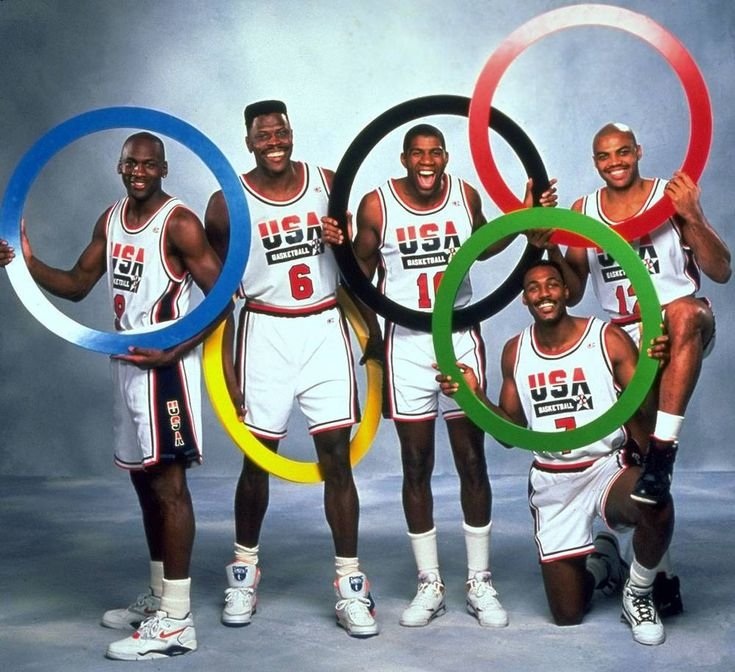
Even the greatest Olympic basketball legends were once at risk of missing the roster. Political conflicts, injuries, crowded talent pools, and controversial selections have left several iconic players on the edge of exclusion. This article explores the untold stories behind these near-snubs, detailing how selection decisions are made, why timing matters, and how some legends narrowly secured their place in Olympic history.
Introduction: The Fragile Line Between Legacy and Exclusion
Olympic basketball appears effortless when viewed from the outside. Legendary players, gold medals, and historic performances seem preordained. Yet behind the scenes, roster decisions are anything but simple.
Even the most accomplished athletes must navigate short preparation periods, national expectations, limited roster spots, and intense competition. One misstep—injury, ego clash, or overlooked skill—can erase years of hard work and jeopardize Olympic dreams.
For example, the USA Men’s National Basketball Team has consistently faced roster dilemmas, where some of basketball’s greatest players nearly missed the Olympics entirely.
This article uncovers the stories of Olympic basketball legends who almost didn’t make the team, explaining what almost kept them off the roster, and how their eventual inclusion reshaped basketball history.
How Olympic Basketball Selection Really Works
Olympic rosters are small—just 12 players—yet the world’s best athletes compete for spots. Selection involves far more than raw talent:
- Team fit under FIBA rules: spacing, defense, and international regulations
- Defensive versatility: can the player adapt to international offenses?
- Willingness to accept reduced roles: stars may need to defer touches
- Health and injury history: short tournaments magnify risks
- International experience: prior exposure to FIBA competition counts
Being one of the best NBA players in the world doesn’t guarantee Olympic inclusion. Chemistry, adaptability, and tactical fit often outweigh reputation, and history shows that even legends face significant scrutiny.
Michael Jordan: The Greatest Player Who Almost Didn’t Go
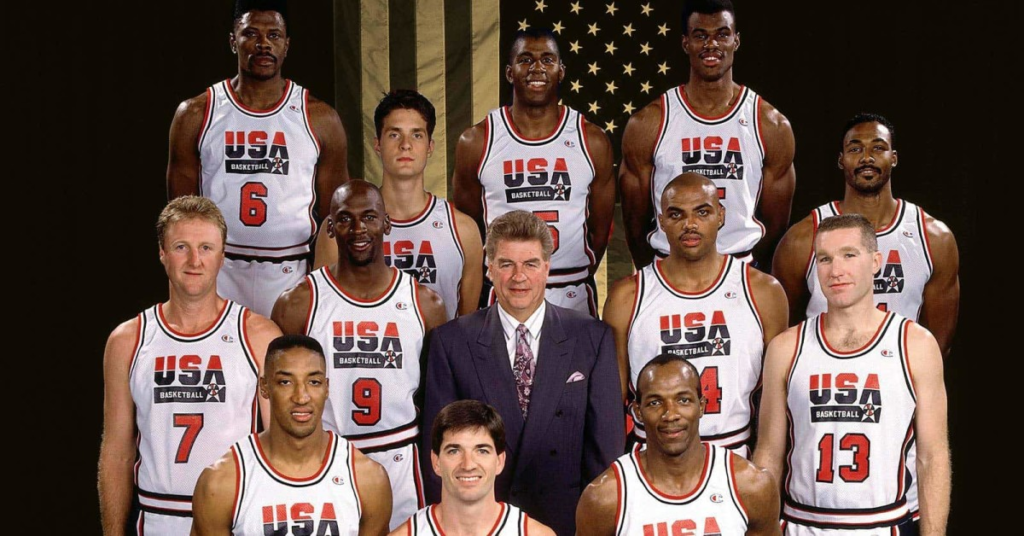
It’s hard to imagine the 1992 Barcelona Olympics without Michael Jordan, but even he was not guaranteed a spot early in the process.
USA Basketball faced several dilemmas:
- NBA player participation was uncertain
- Balancing egos among multiple superstars
- Ensuring team chemistry over individual dominance
Jordan himself reportedly questioned how a roster full of elite players would coexist. Had he opted out—or had selectors prioritized balance over star power—the legendary “Dream Team” may have looked very different. His eventual inclusion revolutionized international basketball and accelerated the NBA’s global expansion.
LeBron James: Youth and Role Uncertainty
LeBron James is now synonymous with Olympic excellence, but in 2004, his future was far from secure.
At that time:
- James was a teenage NBA prodigy
- International experience was limited
- Veterans held priority for leadership and minutes
Coaches debated whether he was ready for the Olympics’ physical and tactical demands. Missing the 2004 roster would have altered his Olympic trajectory entirely. Fortunately, James’s combination of talent, adaptability, and maturity earned him a place, eventually making him a cornerstone of future gold-medal-winning teams.
Kobe Bryant: Politics, Pressure, and Late Redemption
Kobe Bryant’s Olympic story highlights how even top talent can face uncertainty.
- Injuries and political disputes almost kept him from the 2004 Olympics
- Skepticism about his leadership style challenged selectors
- He was not automatically considered essential for 2008 until later
Bryant’s eventual inclusion transformed Team USA. His intensity, defensive focus, and competitive leadership set the standard for the “Redeem Team,” proving that timing and opportunity can be just as important as skill.
Kevin Durant: From Roster Question Mark to Scoring Icon
Even Kevin Durant, one of the greatest scorers of his generation, faced early doubts regarding Olympic inclusion:
- Concerns over defensive versatility and physicality
- Skepticism about translating NBA scoring efficiency to FIBA rules
- Worries about durability and matchups against international power forwards
Durant eventually became one of the most dominant Olympic scorers in history, highlighting how selection decisions can redefine a player’s legacy—or almost prevent it from developing.
Stephen Curry: The Late Arrival Who Nearly Missed the Window
Stephen Curry’s trajectory to the Olympics was anything but certain:
- Early-career injuries raised durability concerns
- His style of play was perceived as system-dependent
- Defensive limitations initially worried selectors
Curry’s eventual inclusion underscored the shift in Olympic basketball toward spacing, shooting, and modern offensive strategies. Had injuries or perception delays persisted, he might never have donned the Olympic jersey.
International Legends Who Faced Olympic Near-Misses
The near-miss phenomenon is not exclusive to Team USA. International stars also faced exclusion threats:
- Manu Ginóbili almost missed Argentina’s 2004 roster due to health issues. He later led one of the most iconic Olympic upsets in history.
- Pau Gasol faced selection uncertainty during injury-plagued seasons. He went on to anchor Spain’s golden generation.
In many countries, where the talent pool is thinner, a single absence can alter Olympic history.
Factors That Put Legends at Risk
Several recurring themes explain why Olympic legends are often near the cut:
- Selection favors fit and chemistry over superstar status
- Short tournaments magnify injuries and role conflicts
- Veteran presence can collide with team hierarchy
- Youth often competes with experience for limited spots
Understanding these factors explains how even the most celebrated athletes could have been left out.
What Fans Rarely Understand About Olympic Selection
Roster decisions are often criticized as arbitrary. Internally, they involve complex risk management:
- Who can defend effectively internationally?
- Who accepts a supporting role?
- Who maintains peak health and adaptability?
- Who enhances, rather than diminishes, team chemistry?
Even basketball icons sometimes fail to meet these criteria temporarily.
Key Takeaways from Olympic Near-Misses
- Olympic success is never guaranteed, even for legends
- Timing and opportunity can matter more than skill
- Chemistry, health, and adaptability often outweigh reputation
- Single roster decisions can alter history
- Near-misses remind us that greatness is fragile
Frequently Asked Questions (FAQ)
1. Why do some Olympic basketball legends almost miss teams?
Ans. Limited roster spots, injuries, chemistry concerns, and tactical fit make even elite players vulnerable.
2. Is Olympic selection harder than NBA All-Star selection?
Ans. Often yes, because Olympic coaches prioritize fit, role acceptance, and defensive versatility.
3. Did Michael Jordan almost skip the 1992 Olympics?
Ans. Yes. Early uncertainty about NBA participation and potential roster conflicts made his selection less automatic than widely known.
4. Why was LeBron James questioned for early Olympic participation?
Ans. Youth, lack of international experience, and competition from veterans created doubts.
5. How did Kobe Bryant impact Team USA’s Olympic culture?
Ans. His defensive focus and leadership reshaped accountability and team intensity.
6. Was Kevin Durant expected to dominate in Olympic play?
Ans. No. Early concerns about defensive adaptation and durability made his inclusion uncertain.
7. Why did Stephen Curry’s Olympic debut come later in his career?
Ans. Injuries and stylistic skepticism delayed his inclusion.
8. Do international teams face similar near-miss scenarios?
Ans. Yes, often with higher stakes due to smaller talent pools.
9. How do injuries affect Olympic roster decisions?
Ans. Significantly. Short tournaments magnify the consequences of any injury.
10. What ultimately secures a roster spot in Olympic basketball?
Ans. Adaptability, health, defensive ability, chemistry, and emotional commitment.
Final Thoughts: Olympic Legends Are Defined by Narrow Margins
Olympic basketball history is shaped not just by those who played, but by those who almost didn’t. For every gold medalist, there is a moment of uncertainty, a fragile roster decision, and a risk that could have erased a legacy.
The stories of Jordan, LeBron, Kobe, Durant, and Curry remind us that Olympic greatness is earned on the edge of uncertainty, making each medal, each performance, and each selection story all the more remarkable.