
 By Hannah Wright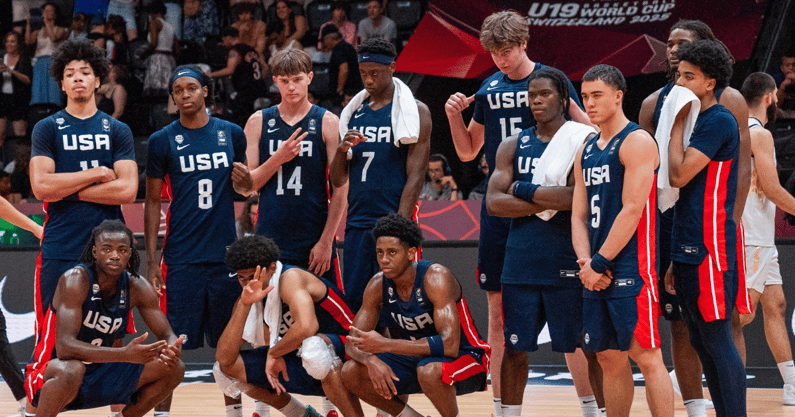
The U.S. U19 men’s basketball team didn’t just win the FIBA U19 World Cup—it delivered a statement that echoed across global basketball. Through elite athleticism, discipline, and depth, Team USA overwhelmed international competition and reset the narrative around American youth dominance. This in-depth analysis explains how they did it, why it mattered, and what it signals for basketball’s future.
Why Was the U.S. U19 FIBA Run So Significant?
For years, a growing belief circulated among fans and analysts: the rest of the world had finally caught up to American basketball. International players were thriving in the NBA, youth academies overseas were producing polished prospects, and Team USA had shown vulnerability at the senior level.
Then the U.S. U19 team arrived at the world stage—and erased those doubts in dominant fashion.
This was not a lucky run or a narrow victory. It was a tournament defined by control, composure, and competitive maturity far beyond the players’ ages. From opening tip to final buzzer, the United States imposed its identity on every opponent.
What Tournament Did the U.S. U19 Team Compete In?
The stage was the FIBA U19 Basketball World Cup, the premier global competition for under-19 national teams, organized by FIBA.
This tournament matters because:
- It represents the final youth international benchmark
- NBA scouts treat it as a forecasting tool
- Trends here often shape senior national teams
Simply put, how teams perform at U19 often predicts where international basketball is heading next.
How Did the U.S. U19 Team Dominate So Convincingly?
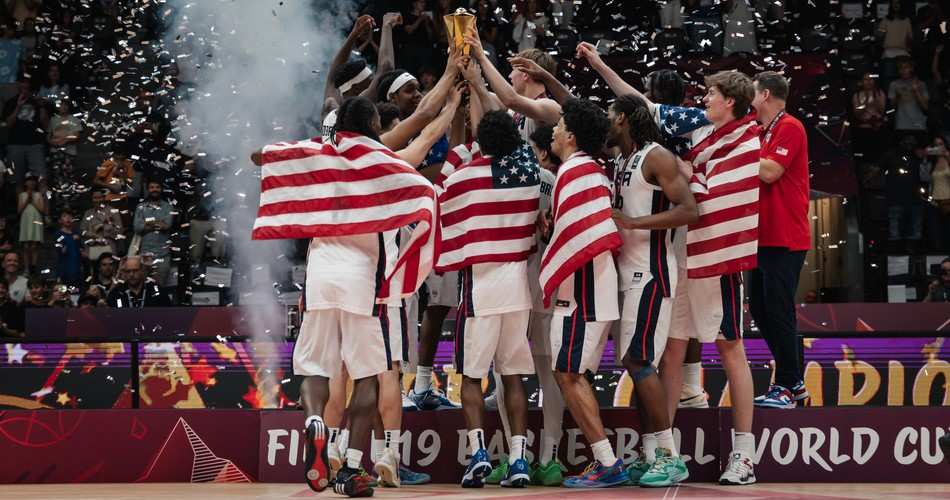
The most striking aspect of the U.S. run was not just winning—it was how they won.
They overwhelmed opponents with relentless pace, physical defense, and a rotating lineup that never allowed fatigue to settle in. Unlike past American youth teams that leaned heavily on individual brilliance, this group played structured, connected basketball.
Real-world example:
Against disciplined European opponents known for ball movement, the U.S. forced turnovers that instantly became fast-break points. What looked like a close tactical battle would suddenly balloon into a double-digit lead within minutes.
Was This Team Just More Athletic Than Everyone Else?
Athleticism played a role—but it wasn’t the whole story.
What separated this group was functional athleticism:
- Guards defended forwards without mismatches
- Bigs ran the floor like wings
- Wings rebounded, passed, and defended without demanding touches
This versatility destroyed traditional positional matchups and forced international teams to abandon their preferred systems.
Why International Teams Struggled to Adjust
International basketball emphasizes structure, spacing, and half-court execution. The U.S. U19 team turned those strengths into weaknesses.
Opponents faced constant pressure:
- Defensive rotations arrived faster than expected
- Transition defense collapsed under pace
- Limited bench depth was exposed late in games
By the second half, many teams were executing well—but still losing ground.
The Hidden Advantage: USA Basketball’s Development System
This dominance wasn’t accidental. It was the result of years of coordinated development by USA Basketball.
Players entered the tournament already accustomed to:
- FIBA rules and officiating
- Defensive principles
- Playing within defined roles
That familiarity showed in high-pressure moments. When games tightened, the U.S. remained calm while opponents rushed decisions.
What This Tournament Revealed About the Global Talent Gap
The global game has improved—there’s no denying that. But this tournament revealed a crucial truth:
The gap hasn’t disappeared.
It has shifted.
International programs produce elite individuals. The U.S. produces depth at scale.
When injuries, foul trouble, or fatigue emerged, the U.S. simply rotated in another high-level athlete without losing intensity.
How This Performance Impacts the NBA Pipeline
NBA scouts don’t evaluate youth tournaments for highlights alone. They study:
- Defensive commitment
- Decision-making speed
- Adaptability under pressure
This tournament elevated multiple American prospects into serious NBA conversations. Historically, players who dominate at this level often translate quickly to the professional game, particularly when they demonstrate team-first habits.
The NBA has long relied on U19 performances as a projection tool—and this year’s data was loud.
What Does This Mean for Future Team USA Rosters?
Youth success doesn’t guarantee senior dominance, but it builds continuity.
Key implications:
- Chemistry formed early carries forward
- Players gain international toughness before NBA careers
- Coaching philosophies remain consistent across levels
In short, this group represents the backbone of future national teams.
How the U.S. U19 Team Answered Critics
Before the tournament, critics questioned American basketball culture:
- “Too much isolation”
- “Not enough defense”
- “Poor international IQ”
This team dismantled those narratives.
They defended collectively.
They shared the ball.
They executed within structure.
The results spoke louder than any debate panel ever could.
What Other Countries Are Learning From This Loss
The response internationally hasn’t been discouragement—it’s adaptation.
Early signs include:
- Increased focus on strength training
- Faster tempo in youth competitions
- Greater exposure to American athletic development models
Global basketball is adjusting again—and that’s a direct response to this performance.
Key Takeaways From the U.S. U19 FIBA Dominance
- The U.S. remains the youth basketball standard
- Depth beats isolated star power
- Athleticism must be paired with discipline
- Early international exposure pays dividends
- Development systems still matter most
Why This Tournament Changed the Global Conversation
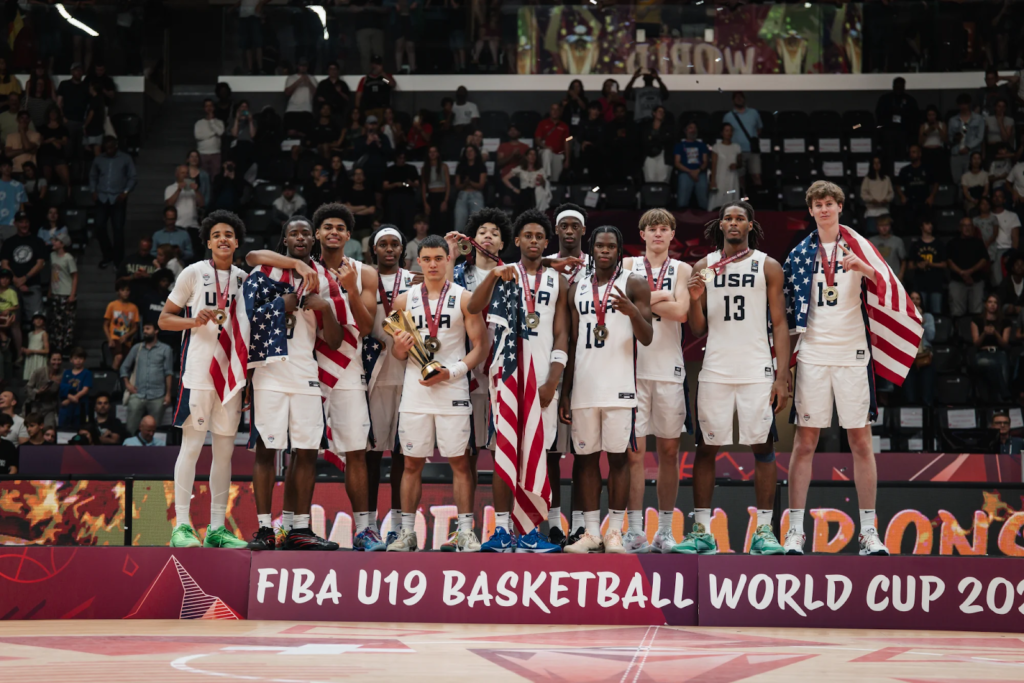
This wasn’t just a gold medal run. It was a reminder.
A reminder that dominance isn’t inherited—it’s rebuilt every generation.
A reminder that development systems matter more than hype.
And a reminder that Team USA, when aligned, still sets the pace.
Frequently Asked Questions (Trending Searches)
1. What is the FIBA U19 Basketball World Cup?
Ans. It is an international tournament featuring the world’s best under-19 national teams, serving as a major scouting and development platform.
2. Why was the U.S. U19 victory so important?
Ans. It came amid widespread belief that international teams had closed the talent gap with the United States.
3. How often does the U.S. win the U19 World Cup?
Ans. The U.S. has won multiple editions, though the level of dominance varies by generation.
4. Do NBA scouts attend the FIBA U19 World Cup?
Ans. Yes, scouts from the NBA and top international leagues closely monitor the tournament.
5. What separated the U.S. team from others?
Ans. Depth, versatility, defensive pressure, and experience playing together.
6. Does U19 success predict NBA success?
Ans. Not guaranteed, but many U19 standouts go on to strong professional careers.
7. Why did international teams struggle tactically?
Ans. They couldn’t consistently match the U.S.’s pace, physicality, and lineup flexibility.
8. What role does USA Basketball play in player development?
Ans. It provides early international exposure, structured coaching, and system continuity.
9. Will these players represent Team USA at senior level?
Ans. Many are expected to feature in future senior national team pools.
10. What does this mean for global basketball?
Ans. It pushes international programs to adapt while reaffirming the U.S. development model.
Final Verdict
The U.S. U19 team didn’t win because the world is behind. They won because they evolved faster. In doing so, they didn’t just silence critics—they reset expectations for what elite youth basketball looks like.
The future of international basketball is competitive.
But for now, the standard still lives in the United States.