
 By Hannah Wright
Artificial intelligence and data science are revolutionizing how NBA teams identify and develop future stars. By analyzing player-tracking data, performance trends, biomechanics, and decision-making patterns, teams can now forecast long-term success with remarkable accuracy. This data-driven evolution is reshaping scouting, the NBA Draft, and player development—quietly determining which prospects will become tomorrow’s superstars.
The New Era of NBA Talent Prediction
For decades, NBA teams relied on traditional scouting methods—eye tests, box scores, and instinctive evaluations formed over years of experience. While those tools still matter, they are no longer enough in a league where the margin between success and failure is razor thin.
Today, artificial intelligence (AI) and data science sit at the heart of NBA front offices. Teams are no longer focused solely on what a player is today. Instead, they ask a far more valuable question:
What will this player become three, five, or ten years from now?
AI helps answer that question by processing millions of data points that no human scout could ever fully comprehend. This shift has quietly transformed how NBA teams draft players, manage development, prevent injuries, and build championship rosters.
Why Traditional Scouting Needed an Upgrade
Traditional scouting often rewarded what was most visible—scoring totals, athletic explosiveness, or dominance at lower competition levels. History has shown that these traits alone are unreliable predictors of NBA stardom.
Countless high-scoring college players struggled to adjust to the NBA’s speed and complexity. At the same time, players once dismissed as unathletic or “low upside” became MVPs and franchise cornerstones.
The issue lies in non-linear player development. Growth doesn’t follow a straight line, and raw stats rarely tell the full story.
AI fills this gap by analyzing:
- Skill translation across leagues
- Long-term improvement trends
- Decision-making under pressure
- Physical sustainability over time
Rather than reacting to performance, teams now forecast it.
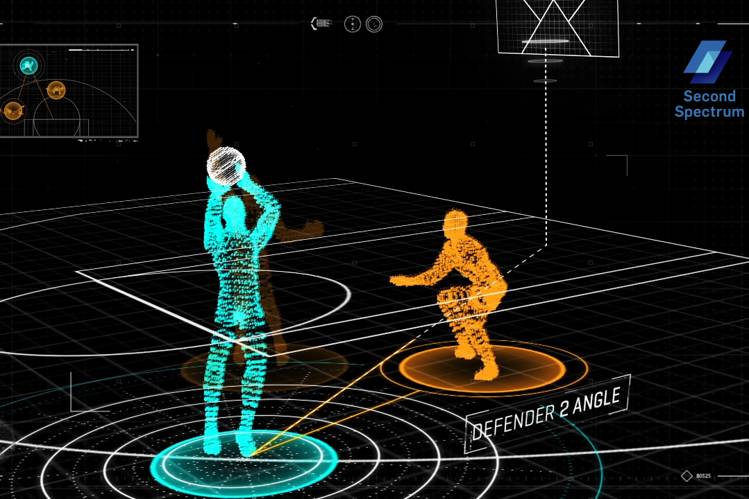
How AI and Data Science Actually Work in the NBA
Modern NBA analytics blends machine learning, computer vision, biomechanics, and historical performance modeling. These systems are trained on decades of player data, allowing them to recognize patterns that consistently lead to elite careers.
Instead of focusing on a single season, AI models examine how players evolve year over year. They identify signals that correlate with long-term success, even when short-term results appear unimpressive.
The objective isn’t certainty—it’s probability. NBA teams want to increase their odds of finding the next star before the rest of the league does.
The Data Inputs That Matter Most
AI models rely on a wide range of data points, including:
- Player-tracking movement data
- Shot quality and efficiency metrics
- Defensive positioning and reaction time
- Passing angles and decision speed
- Fatigue and workload patterns
- Age-adjusted improvement curves
Each variable on its own may seem insignificant. Combined, they paint a predictive picture of future NBA impact.
A Real-World Breakthrough: Predicting an MVP Before the Spotlight
Before becoming an MVP, Nikola Jokić was often labeled slow, unathletic, and defensively limited. Traditional scouting saw flaws. Data science saw opportunity.
AI analysis highlighted:
- Exceptional passing efficiency under pressure
- Rare decision-making speed for a center
- Shot selection patterns matching elite big men
- Defensive positioning efficiency despite limited speed
These indicators predicted dominance years before it became obvious. Teams that trusted the data gained a massive competitive advantage.
Player-Tracking Technology: The NBA’s Hidden Weapon
Every NBA game now produces millions of data points through optical tracking systems. These systems track every movement on the court—every cut, rotation, sprint, and hesitation.
AI transforms this information into actionable insights, such as:
- How quickly players react to defensive breakdowns
- Whether spacing improves team efficiency
- Which players consistently create advantages without scoring
This technology allows teams to identify stars who impact winning in ways traditional stats never capture.
Why Basketball IQ Outranks Athleticism
One of the most important discoveries in NBA analytics is that decision-making predicts longevity better than raw athleticism.
AI measures basketball IQ by analyzing:
- Time between receiving the ball and making a play
- Correct reads versus forced decisions
- Adaptability to different defensive schemes
Players with elite processing speed age better, remain effective longer, and elevate teammates. This explains why certain players dominate despite average athletic profiles.
Predicting Injuries Before They Happen
Availability is a skill—and AI treats it as such.
NBA teams now use predictive models to assess injury risk by analyzing:
- Biomechanical stress patterns
- Movement asymmetries
- Recovery efficiency
- Cumulative workload
By identifying red flags early, teams can adjust training, rest schedules, and development plans. Organizations using advanced injury modeling have significantly reduced major soft-tissue injuries over multi-year spans.
How AI Has Changed the NBA Draft Forever
Draft night is no longer about intuition alone. Teams simulate outcomes the way financial analysts evaluate investments.
Modern draft rooms use AI to:
- Project career value over time
- Compare development timelines
- Simulate roster fit scenarios
- Evaluate contract efficiency
This is why “surprise picks” happen more often—and succeed. What looks like a reach to fans is often a data-validated decision.
Why AI Favors International Prospects
International basketball systems provide cleaner development data. Players turn professional earlier, face structured competition, and follow consistent training pathways.
AI models often favor international prospects because:
- Their efficiency metrics are less inflated
- Their development curves are more stable
- Their skill foundations are stronger
This explains why international players increasingly dominate MVP races and All-NBA teams.
The Human Element Still Matters
Despite the rise of AI, no NBA team relies on algorithms alone.
The most successful organizations combine:
- Data-driven forecasts
- Human scouting insight
- Psychological profiling
- Cultural and locker-room evaluation
AI narrows the field. Humans make the final decision.
Ethical Challenges and Data Bias
AI is only as good as the data it learns from. Historical biases can influence projections, particularly for unconventional development paths.
NBA teams now invest heavily in:
- Model transparency
- Bias audits
- Continuous recalibration
Trust and fairness are essential as AI plays a larger role in player evaluation.
What This Means for Players, Coaches, and Fans
For young players, this shift means:
- Decision-making matters more than highlight plays
- Efficiency beats volume scoring
- Long-term growth is more valuable than early dominance
For fans, it means the next NBA star may already be identified—years before the mainstream catches on.
The Future of AI in the NBA
In the coming decade, expect:
- Real-time development projections
- Personalized AI-driven training plans
- Mental resilience modeling
- Smarter contract valuation
The teams that master these tools won’t just win games—they’ll define eras.

Frequently Asked Questions (FAQs)
1. How do NBA teams use AI to predict future stars?
Ans. NBA teams analyze player-tracking data, efficiency metrics, development curves, and injury risk using machine-learning models trained on historical NBA careers.
2. Can AI accurately predict NBA success?
Ans. AI predicts probabilities, not guarantees. However, it significantly improves accuracy compared to traditional scouting alone.
3. What data matters most in predicting NBA greatness?
Ans. Decision-making speed, efficiency under pressure, adaptability, and long-term health matter more than raw athleticism.
4. Do all NBA teams use AI analytics?
Ans. Yes, every NBA team uses analytics, but the sophistication and integration level varies widely.
5. Is AI responsible for surprise NBA draft picks?
Ans. Often, yes. Many unexpected picks are supported by long-term predictive models rather than short-term performance.
6. Does AI favor international basketball players?
Ans. AI often values international prospects due to cleaner development data and structured training systems.
7. Can AI predict injuries before they happen?
Ans. AI estimates injury risk probabilities and helps teams prevent certain injuries through workload and recovery management.
8. Will AI replace human NBA scouts?
Ans. No. The best teams combine AI insights with human judgment and experience.
9. How early can AI identify future NBA stars?
Ans. Some models analyze players as young as 14–16 by tracking long-term development trajectories.
10. Is AI changing how fans understand basketball?
Ans. Yes. Fans increasingly evaluate players through efficiency, spacing, and decision-making rather than highlights alone.