
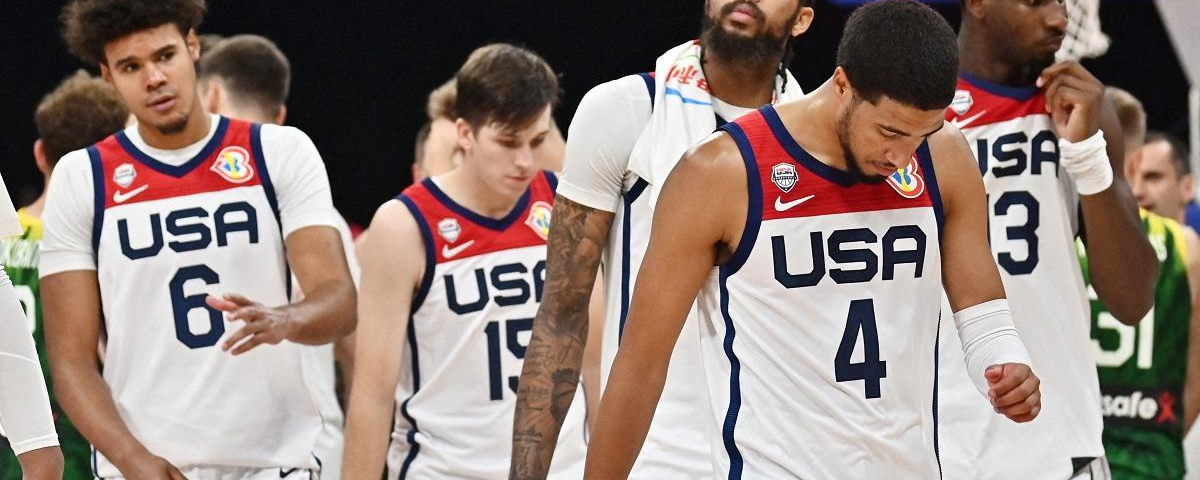
A shocking international defeat forced USA Basketball into a moment of reckoning. Once untouchable, Team USA faced hard truths about preparation, roster construction, coaching philosophy, and the rapid rise of global basketball powers. This deep-dive explores what really happened after the crushing FIBA loss, how the fallout reshaped American basketball, and why the setback may ultimately strengthen Team USA’s future.
Introduction: The Night the Basketball World Changed
For generations, the United States walked into international basketball tournaments with an unspoken advantage: inevitability. The jerseys alone intimidated opponents. The assumption was simple—NBA talent would overpower everyone else, eventually.
Then came the crushing loss at the FIBA Basketball World Cup.
It wasn’t just a loss on the scoreboard. It was a psychological shift. The world no longer viewed Team USA as unbeatable. More importantly, American fans realized something uncomfortable: the gap between the United States and the rest of the basketball world had narrowed—dramatically.
What followed was not chaos, but introspection. And that introspection reshaped USA Basketball in ways that are still unfolding.
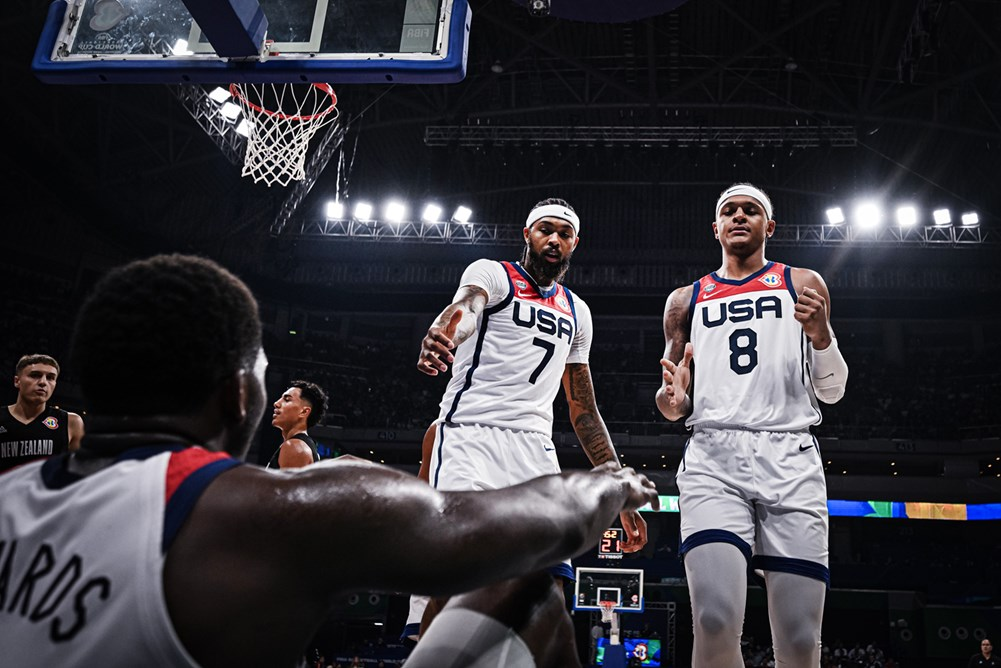
The Crushing FIBA Loss That Shook USA Basketball
The defeat itself didn’t come down to a single possession or a fluke bounce. Over the course of the tournament, warning signs piled up. Defensive rotations broke down. Rebounding margins tilted the wrong way. Late-game execution felt rushed rather than controlled.
International opponents played with clarity and confidence. Team USA, for the first time in years, looked unsure of itself.
The most alarming part? This wasn’t an underdog miracle. The loss felt earned by the opponent—and that made it impossible to dismiss.
Why This Loss Felt Different From Past International Setbacks
Team USA has lost before. But this defeat hit differently for three major reasons.
First, the roster was loaded with NBA players in their primes, not fringe contributors or late replacements. Second, the loss reflected systemic issues rather than bad luck. Third, it happened in an era when international players now dominate the NBA’s highest individual honors.
This wasn’t a wake-up call whispered in private. It was a global announcement.
Has the Rest of the World Finally Caught Up to the USA?
The short answer is yes—but the long answer matters more.
International basketball didn’t catch up overnight. It evolved deliberately. Countries invested in youth academies, coaching education, and continuity. Players grew up learning how to play together, not just how to score.
Meanwhile, American basketball culture leaned heavily into individual development through AAU circuits, highlight culture, and short-term team assembly.
The result is not a lack of American talent—but a contrast in basketball education.
Talent Was Never the Problem—Fit Was
One of the biggest misconceptions after the loss was that Team USA lacked talent. That simply isn’t true.
The issue was fit.
Many players were accustomed to being primary options. In FIBA competition, roles must be compressed. Touches are fewer. Defensive discipline matters more than offensive freedom.
Opponents knew exactly who they were and how they wanted to play. Team USA was still figuring it out in real time.
How FIBA Rules Exposed Structural Weaknesses
FIBA basketball is not NBA basketball with different jerseys.
The physicality is higher. Defensive three-seconds do not exist. Zone defenses are not just allowed—they are mastered. Goaltending rules punish poor rim protection and hesitation.
American players raised in NBA spacing systems often need time to adjust. In short tournaments, time is a luxury no team has.
This ruleset didn’t disadvantage Team USA unfairly—it exposed gaps in preparation.
Coaching Under the Microscope: Fair or Not?
After the loss, coaching decisions became a lightning rod.
Some criticism was emotional. Some was legitimate.
International coaches are specialists in exploiting mismatches quickly. They run sets designed to test discipline, not athleticism. Team USA’s staff emphasized flexibility and switching, but at times lacked counters when opponents attacked specific weaknesses.
The reality is that coaching in international tournaments demands near-perfect adaptability. Even small delays in adjustment can swing games.
Inside the Locker Room: Accountability Replaced Excuses
What happened next surprised many critics.
There was no internal collapse. No public blame-shifting. Players and coaches openly acknowledged mistakes. Preparation, not passion, became the focus of discussion.
Veteran voices stressed humility. Younger players admitted they underestimated the level of cohesion their opponents possessed.
The tone shifted from frustration to problem-solving.
Fan Reaction: Shock, Anger, and an Unexpected Respect
American fans reacted intensely—and honestly.
Sports radio lit up with debates about AAU culture. Social media questioned whether NBA stars cared enough about international play. But beneath the outrage was a growing respect for global basketball.
Many fans admitted something they hadn’t before: international teams weren’t just “catching fire.” They were better prepared.
What USA Basketball Changed After the Loss
The loss triggered a philosophical reset.
Instead of assembling the most famous roster, USA Basketball began prioritizing continuity, role clarity, and defensive commitment. Players were encouraged to commit earlier. Lineups emphasized balance over star power.
The objective shifted from dominance through talent to dominance through execution.
Why This Loss May Strengthen Team USA Long-Term
History suggests setbacks often produce evolution.
Previous international disappointments led to better systems, clearer leadership, and more intentional roster construction. This loss followed the same pattern—but with greater urgency.
USA Basketball didn’t lose its place at the top. It lost complacency.
And that may be far more valuable.
The Bigger Picture: Basketball Is Now Truly Global
Perhaps the most important takeaway isn’t about Team USA at all.
Basketball has become a global language. Styles differ, but excellence is universal. The United States remains a powerhouse—but no longer stands alone.
Every tournament now requires respect, preparation, and adaptability.
That’s not a decline. That’s progress.
Final Verdict: What Really Happened After the Crushing FIBA Loss?
Team USA didn’t fall apart.
It was exposed.
Exposed to better preparation
Exposed to global parity
Exposed to outdated assumptions
And from that exposure came evolution.
The loss wasn’t the end of American basketball dominance. It was the end of taking it for granted.
Frequently Asked Questions (SEO-Optimized)
1. What caused Team USA’s crushing FIBA loss?
Ans. The loss resulted from poor roster fit, limited preparation time, unfamiliarity with FIBA rules, and underestimating highly organized international opponents.
2. Is international basketball actually better now than before?
Ans. Yes. Many international programs emphasize team chemistry, fundamentals, and continuity, which has closed the gap with American basketball.
3. Did NBA players struggle under FIBA rules?
Ans. Several players had difficulty adjusting to physical defense, zone schemes, and different goaltending and spacing rules.
4. Was coaching a major issue for Team USA?
Ans. Coaching was not the sole issue, but delayed adjustments and lineup decisions played a role in critical moments.
5. Why do FIBA tournaments seem harder for the USA?
Ans. Short preparation windows and unfamiliar rules make execution more important than raw talent.
6. Did Team USA underestimate their opponents?
Ans. Some players admitted they did not fully appreciate the experience and cohesion of international teams.
7. What changes did USA Basketball make after the loss?
Ans. The program emphasized earlier player commitments, clearer roles, stronger defense, and more FIBA-experienced rosters.
8. Is Team USA still the best basketball program in the world?
Ans. In terms of talent depth, yes—but sustained success now requires preparation and system cohesion.
9. Will future Team USA rosters be different?
Ans. Expect more balance, size, defensive specialists, and players familiar with international competition.
10. Could another shocking loss happen again?
Ans. Only if lessons are ignored. The margin for error is small, but the blueprint for success is clear.