
 By Rachel Evans
As global basketball reaches a new competitive peak, USA Basketball’s future success depends on a rising generation of adaptable, battle-tested stars. This long-form analysis breaks down the top five American players poised for a major breakout in 2026, explaining how their skills translate to international play, why coaches trust them, and what makes them essential to Team USA’s next era.
Why 2026 Is a Pivotal Year for USA Basketball
The conversation around USA Basketball has shifted. No longer is the debate about whether Team USA has the most talent—everyone agrees it does. The real question Americans are now asking is how that talent is being used.
Recent international tournaments have exposed a new reality: the margin between the United States and the rest of the world has narrowed dramatically. International teams are more organized, more physical, and more prepared than ever before. That makes 2026 a turning point—a year where younger players are no longer learning but leading.
This upcoming generation won’t have the luxury of easing into the spotlight. They will be expected to anchor lineups, close games, and respond to pressure in unfamiliar environments. The five players highlighted in this article stand out not just because of their NBA résumés, but because their games translate to the realities of modern international basketball.
What Defines a True Breakout Star for Team USA?
A breakout star for USA Basketball is different from a breakout star in the NBA.
International competition under FIBA places a premium on traits that don’t always dominate highlight reels. Coaches and scouts prioritize players who can adapt quickly, defend multiple positions, and thrive without monopolizing the ball.
Key qualities that matter most:
- Comfort playing through physical contact
- Defensive awareness and communication
- Willingness to sacrifice scoring for team flow
- Mental composure under hostile crowd pressure
Each of the following players checks those boxes in real, measurable ways.
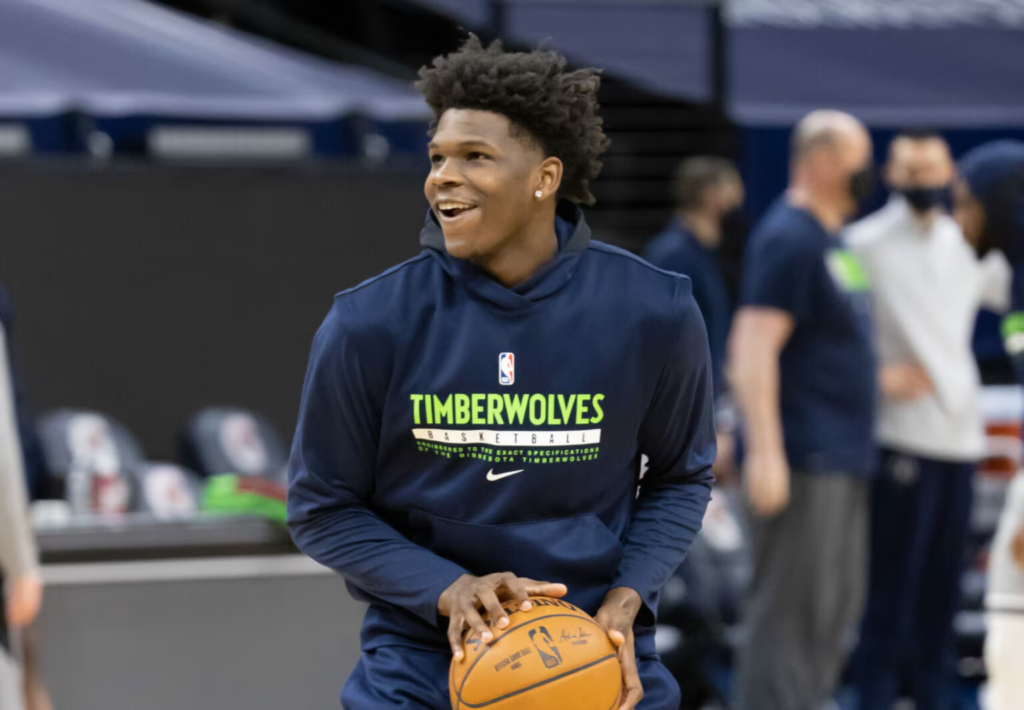
1. Anthony Edwards — The Emerging Face of USA Basketball
Anthony Edwards has already crossed the line from prospect to star, but 2026 is shaping up to be the year he becomes the guy for Team USA.
Edwards’ game is tailor-made for international play. He attacks decisively, finishes through contact, and doesn’t rely on whistles to score. More importantly, his defensive engagement has grown significantly—something international coaches value deeply.
In recent high-stakes NBA matchups, Edwards has taken on elite perimeter assignments while still carrying a heavy offensive load. That balance is rare. Under FIBA rules, where spacing is tighter and help defense arrives earlier, his strength and explosiveness become even more valuable.
What separates Edwards from past American scorers is his mindset. He doesn’t shrink from responsibility. In international basketball, where hesitation often costs medals, that confidence matters.
2. Tyrese Haliburton — The Calm Engine Behind Winning Basketball
If Edwards represents force, Tyrese Haliburton represents flow.
Haliburton’s value doesn’t always show up in viral clips, but it consistently appears in winning results. He controls tempo, reads defenses quickly, and makes teammates better—exactly what Team USA has occasionally lacked in recent tournaments.
In games where defenses load up and physicality increases, Haliburton simplifies the offense. He advances the ball early, finds shooters in rhythm, and avoids over-dribbling. This mirrors the approach long used by elite European national teams.
For USA Basketball, Haliburton is not just a point guard—he’s a stabilizer. In 2026, when rotations tighten and pressure rises, that calm presence could be decisive.
3. Paolo Banchero — Built for International Physicality
Among all young American forwards, Paolo Banchero may be the most naturally suited for international competition.
Banchero thrives in crowded lanes. He scores with strength, absorbs contact without losing balance, and consistently makes the right read when double-teamed. Those traits are essential under FIBA rules, where physical defense is not only allowed—it’s expected.
International basketball often favors players who can slow the game down and impose their will. Banchero already plays at that pace. He doesn’t rush shots, doesn’t panic under pressure, and doesn’t depend on isolation spacing to be effective.
By 2026, with additional experience and refinement, Banchero could be the kind of matchup problem international teams struggle to scheme against.
4. Chet Holmgren — The Defensive X-Factor
Defense wins championships internationally, and Chet Holmgren might be the most impactful defensive piece Team USA has developed in years.
Holmgren’s value lies in his versatility. He protects the rim without fouling, switches onto guards when needed, and recovers quickly enough to contest shots on the perimeter. Under FIBA rules, where zone defenses and help rotations are more common, that flexibility is invaluable.
In real games, Holmgren’s presence alters offensive decision-making. Drivers hesitate. Shooters rush. Entire possessions change because of his positioning.
Offensively, his ability to stretch the floor forces opposing bigs away from the basket, opening lanes for teammates. That two-way impact could swing close games in USA Basketball’s favor.
5. Jalen Williams — The Breakout Star Casual Fans Overlook
Every great international team has a player who does everything well—and gets overlooked until the final score tells the story. Jalen Williams fits that mold perfectly.
Williams doesn’t need plays drawn up for him. He cuts at the right time, defends multiple positions, rebounds aggressively, and scores efficiently within the flow of the offense. That adaptability is priceless in international rotations.
In playoff-level NBA environments, Williams has repeatedly proven he can impact games without dominating the ball. For Team USA, that means seamless lineup combinations and fewer defensive compromises.
By 2026, Williams could be the kind of player coaches trust in closing lineups—even if he’s not the biggest name on the roster.
Why These Five Represent the Future of Team USA
What unites these players isn’t hype—it’s fit.
They reflect a philosophical shift within USA Basketball toward:
- Versatility over specialization
- Decision-making over isolation scoring
- Defense as a foundation, not an afterthought
This mirrors the evolution of global basketball and addresses the exact weaknesses exposed in recent tournaments.
Key Traits USA Basketball Is Prioritizing Going Forward
- Multi-positional defenders
- Playmakers who don’t need high usage
- Scorers comfortable in traffic
- Players who communicate and adapt quickly
Each of the five breakout stars embodies these priorities.
What Coaches and Scouts Are Watching Closely
Across training camps and international exhibitions, attention is focused on:
- Who adapts fastest to FIBA officiating
- Who leads vocally on defense
- Who stays composed in close games
These are the moments where future Team USA leaders reveal themselves.
Frequently Asked Questions (Trending Search Queries)
1. Who is the biggest breakout star for USA Basketball in 2026?
Ans. Anthony Edwards is widely considered the top breakout candidate due to his scoring ability, confidence, and growing defensive impact.
2. Why is 2026 important for Team USA?
Ans. 2026 represents a transition year where younger players are expected to take leadership roles in international competition.
3. What skills matter most in international basketball?
Ans. Physical toughness, decision-making, defensive versatility, and adaptability are more important than pure athleticism.
4. Is Tyrese Haliburton a good fit for FIBA play?
Ans. Yes. His passing, pace control, and unselfish style translate extremely well to international basketball.
5. Can Paolo Banchero dominate outside the NBA?
Ans. His strength, patience, and ability to score through contact make him ideally suited for international competition.
6. Why is defense so critical for USA Basketball success?
Ans. International games are often slower and closer, making defensive execution the deciding factor.
7. What makes Chet Holmgren unique for Team USA?
Ans. His ability to protect the rim, switch defensively, and space the floor gives coaches tactical flexibility.
8. Are role players more valuable internationally than stars?
Ans. Often yes. Players who excel within defined roles frequently outperform bigger names in FIBA tournaments.
9. What role could Jalen Williams play in 2026?
Ans. He projects as a high-impact two-way wing who stabilizes lineups and boosts efficiency.
10. Is Team USA still favored in global basketball?
Ans. Yes, but the margin is slimmer than ever, making preparation and player fit crucial.
Final Thoughts: The Next Era Is Already Here
USA Basketball’s future will not be shaped by reputation alone. It will be shaped by players who understand the modern international game and embrace its demands.
The five breakout stars highlighted here don’t just represent talent—they represent adaptation. And in 2026, adaptation may be the difference between disappointment and dominance.