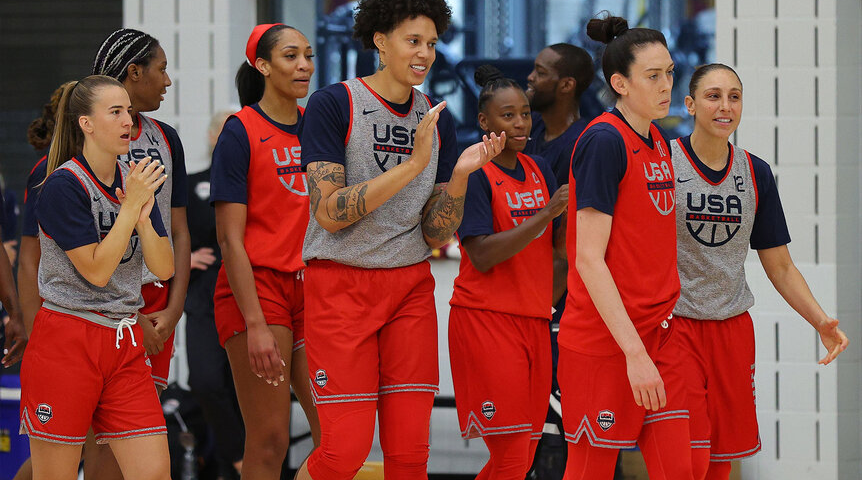
USA Basketball tryouts are nothing like traditional sports tryouts. Behind closed doors, selection is driven less by scoring and more by chemistry, decision-making, adaptability to FIBA rules, and long-term commitment. This in-depth investigation reveals how Team USA truly evaluates players, why NBA stars quietly get cut, and what the program values most when choosing who represents the country.
Introduction: The Myth of “Just Being Good Enough”
For most fans, the idea of USA Basketball tryouts seems straightforward. If you’re one of the best players in the NBA, you show up, dominate practice, and wear the jersey. Simple.
The reality inside USA Basketball is far more complex—and far more unforgiving.
USA Basketball tryouts are not talent showcases. They are behavioral audits, psychological stress tests, and international basketball simulations disguised as practices. Players don’t fail because they can’t score. They fail because they can’t adapt, can’t shrink their role, or can’t prove they fit the system.
What follows is the truth fans rarely hear—and players rarely talk about publicly.
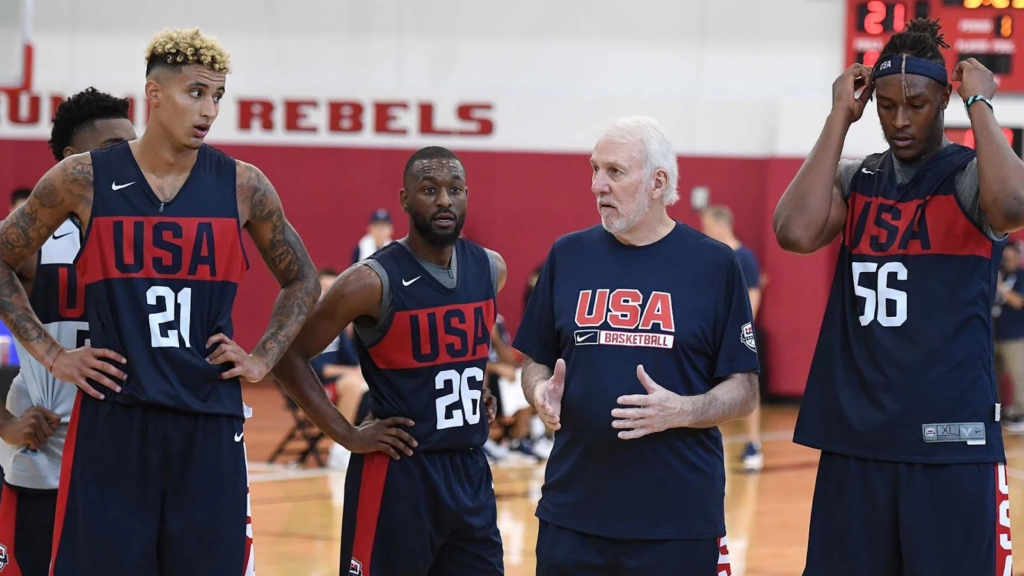
Why Are Americans Searching: “How Does USA Basketball Really Choose Players?”
Every Olympic cycle, search traffic explodes around Team USA roster decisions. Fans ask:
- Why did this All-Star get cut?
- Why did a role player make the team?
- Why won’t USA Basketball explain its decisions?
These questions aren’t random. They’re reactions to a selection process that operates almost entirely out of public view.
Unlike NBA teams, USA Basketball doesn’t owe explanations. And unlike college tryouts, performance alone doesn’t decide outcomes.
The First Hidden Reality: USA Basketball Tryouts Are Invitation-Only
There are no open tryouts. None.
Every player invited to camp has already been:
- Scouted for years
- Evaluated in international contexts
- Profiled for personality, adaptability, and availability
By the time an invitation arrives, selectors already know a player’s strengths and weaknesses. Camp is not about discovery—it’s about confirmation.
That means mistakes are magnified, not forgiven.
What Actually Happens Inside Team USA Tryouts
Practices are tightly controlled and deliberately uncomfortable.
Much of the evaluation happens during:
- Short, chaotic drills meant to induce mistakes
- Situational scrimmages (late-game, foul trouble, clock pressure)
- Defensive communication breakdown tests
- Ball-movement sequences against zone defenses
Coaches aren’t watching who scores. They’re watching who thinks clearly when things go wrong.
The Shocking Truth: Scoring Is One of the Least Important Factors
One of the biggest misconceptions is that scoring impresses selectors.
In reality, players often hurt their chances by:
- Forcing shots
- Ignoring open teammates
- Playing isolation basketball
- Hunting highlights
International basketball doesn’t reward hero ball. Tryouts are designed to expose players who can’t break NBA habits.
Real-Life Pattern: Why Elite NBA Stars Get Quietly Cut
Over the years, numerous elite scorers have failed to make Team USA rosters. Not because they weren’t good—but because they struggled with:
- Assist-to-turnover efficiency
- Defensive awareness off the ball
- Accepting reduced offensive roles
- Adjusting to FIBA spacing and physicality
These flaws surface quickly in camp. And unlike the NBA, there’s no 82-game season to work through them.
Chemistry Is Evaluated Before Dominance
USA Basketball values fit over firepower.
Selectors closely observe:
- Who communicates on defense
- Who moves without the ball
- Who celebrates teammates’ success
- Who adapts instantly to new lineups
Players who disrupt rhythm—even unintentionally—often see their minutes disappear quietly.
The Psychological Test Nobody Talks About
Tryouts are as much mental as physical.
Players are deliberately placed in:
- Lineups where they won’t shine
- Situations where they don’t get touches
- Defensive assignments they dislike
The question isn’t “Can you dominate?”
It’s “Can you stay engaged when you don’t?”
Many can’t.
The Political Reality (Without the Conspiracy)
USA Basketball isn’t political in the traditional sense—but relationships matter.
Key factors include:
- Previous commitment to USA Basketball programs
- Willingness to play in non-Olympic years
- Medical transparency
- Reliability across multi-year cycles
Players who decline invitations repeatedly without strong reasons often find themselves quietly replaced.
Role Acceptance: The Silent Deal-Breaker
For many NBA stars, this is the hardest adjustment.
Selectors evaluate:
- Will this player defend relentlessly without scoring?
- Can they play 12 minutes without frustration?
- Do they accept coaching instantly?
Players who visibly struggle with reduced roles almost never make final rosters—no matter how famous they are.
The FIBA Reality Check: Where NBA Habits Get Exposed
Tryouts are structured around international basketball realities:
- No defensive three-second rule
- Tighter spacing
- More physical perimeter defense
- Fewer possessions
Players who rely on NBA spacing or whistles often look uncomfortable. That discomfort is a red flag.
How Cuts Really Happen (And Why You Never Hear About Them)
There’s rarely a dramatic moment.
Instead:
- Playing time quietly drops
- Drill reps decrease
- Feedback becomes vague
- Invitations stop coming
Many players don’t realize they’ve failed until rosters are announced publicly.
Why Younger or Lesser-Known Players Often Win
Less famous players frequently outperform stars because they:
- Listen more
- Play harder defensively
- Accept roles naturally
- Bring urgency to every rep
Hunger matters. Ego hurts.
Lessons Learned From Past Failures
After failures like the 2004 Athens Olympics and 2019 FIBA World Cup, USA Basketball fundamentally changed its approach.
Modern tryouts emphasize:
- Continuity over last-minute assembly
- Long-term availability
- System fit over star accumulation
The era of “just show up and win” is over.
What Fans Never See on Television
TV cameras show smiles and dunks. Reality includes:
- Brutally honest film sessions
- Direct, unemotional feedback
- Zero tolerance for disengagement
USA Basketball tryouts resemble elite military selection more than an All-Star weekend.
Practical Takeaways for Fans and Players
- NBA greatness doesn’t guarantee international success
- Basketball IQ matters more than highlights
- Selflessness is evaluated constantly
- Trust and commitment influence future chances
This explains why some cuts that shock fans make perfect sense internally.
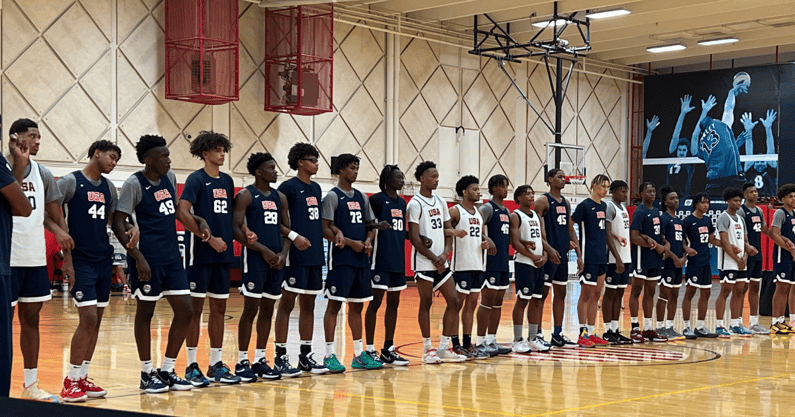
Frequently Asked Questions (Trending Search Queries)
1. Are USA Basketball tryouts open to the public?
Ans. No. All tryouts are invitation-only and privately run.
2. Do NBA statistics matter in Team USA selection?
Ans. They matter initially, but behavior and fit matter far more at camp.
3. Why do All-Stars get cut from Team USA?
Ans. Poor role acceptance, defensive issues, or struggles with FIBA style.
4. How long does the tryout process last?
Ans. Often multiple camps across several years, not just one session.
5. Is chemistry more important than talent?
Ans. Yes—especially in international competition.
6. Are players judged on attitude?
Ans. Constantly. Body language and communication are critical.
7. Do declined invitations affect future chances?
Ans. Yes. Commitment history matters.
8. How important is defense in tryouts?
Ans. Extremely important—often more than scoring.
9. Can younger players beat veterans?
Ans. Absolutely, if they adapt faster and accept roles.
10. Why doesn’t USA Basketball explain cuts publicly?
Ans. To protect relationships and player reputations.
Final Truth: The Jersey Is Earned Long Before the Final Whistle
USA Basketball tryouts are not about proving you’re elite. They’re about proving you belong in a system designed for international warfare—not individual glory.
The untold truth is simple: Team USA selects trust, adaptability, and discipline before talent ever takes over.
Those who understand this thrive.
Those who don’t often leave confused—wondering what went wrong.