
 By Rachel Evans
FIBA U16 champions don’t dominate by chance. Their success is built through advanced training systems that emphasize decision-making, mental toughness, physical durability, and team-first basketball. This in-depth analysis reveals the real training secrets behind unstoppable U16 teams, explains why they consistently outperform global competition, and shows what their methods mean for the future of international and American youth basketball.
Why FIBA U16 Championships Matter More Than Most People Think
Youth basketball rarely commands the global spotlight, yet insiders across the basketball world agree on one thing: FIBA U16 championships are among the most accurate predictors of future basketball dominance. These tournaments are not simply about who is best at age sixteen. They reveal which countries have built development systems capable of producing elite players year after year.
Organized by FIBA, U16 championships act as a testing ground for modern basketball philosophy. Teams that dominate at this level often go on to:
- Win U18 and U19 world titles
- Supply future NBA and EuroLeague players
- Shape the tactical trends of senior international basketball
When a U16 team becomes truly unstoppable, it is never because of talent alone. It is because preparation has reached a level others cannot match.
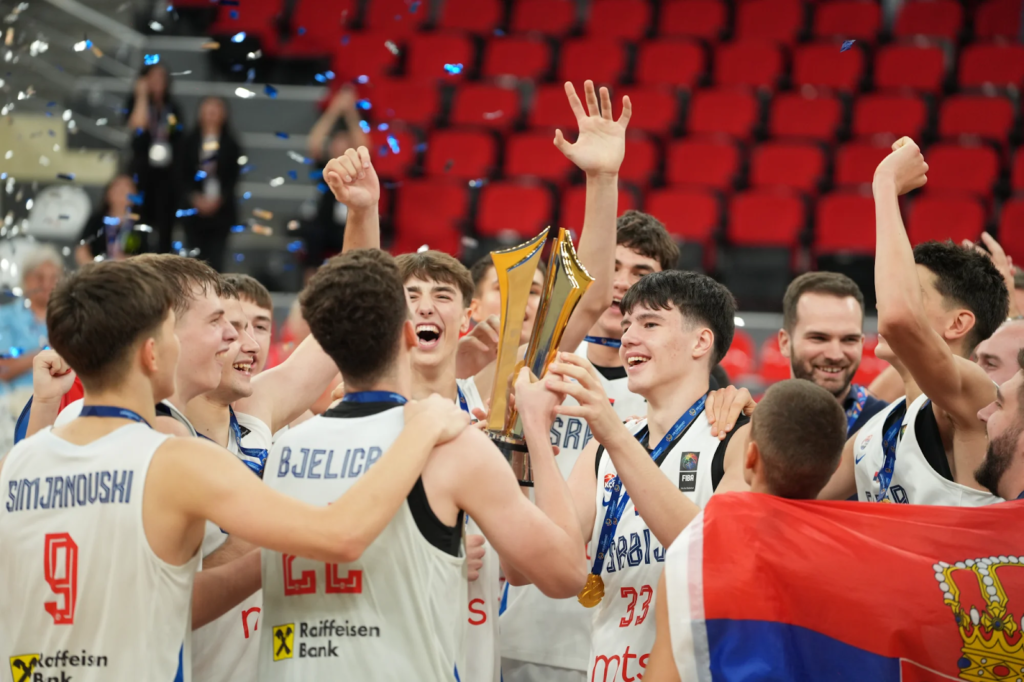
What Does “Unstoppable” Actually Look Like at the U16 Level?
Dominance at the U16 level does not look like highlight reels or isolation scoring explosions. Instead, it shows up in consistency and control.
Unstoppable teams:
- Build leads without forcing shots
- Defend every possession with discipline
- Communicate constantly on the floor
- Look physically and mentally stronger late in games
Real-life pattern:
Across recent FIBA U16 tournaments, champions frequently separate from opponents in the third quarter, when fatigue and frustration begin to affect decision-making. That separation is not accidental—it is trained.
The Foundation: Why Decision-Making Is Trained Before Talent
Most youth programs focus heavily on skills—shooting form, dribbling drills, and individual moves. Elite FIBA U16 programs flip that approach.
They prioritize decision-making under pressure.
Players are taught to:
- Read help defense instantly
- Make the correct pass before pressure arrives
- Understand shot value, not shot volume
- Control tempo without relying on coaches
Practices are intentionally chaotic. Scrimmages include:
- Shot-clock pressure situations
- Numerical disadvantages (4-on-5, 3-on-4)
- Sudden rule changes mid-play
By the time tournament games begin, players have already experienced worse conditions in practice.
Why Physical Training Starts Earlier Than Fans Expect
A common misconception is that elite youth teams avoid physical training. In reality, FIBA U16 champions begin physical preparation earlier—but smarter.
They do not chase muscle size.
They focus on movement quality and durability.
Physical preparation includes:
- Core strength and balance
- Hip, knee, and ankle mobility
- Landing mechanics and deceleration control
- Injury-prevention routines
Real-world effect:
Championship teams often play four or five high-intensity games in a short span. While opponents visibly slow down, elite U16 teams maintain pace and defensive pressure through the final minutes.
Conditioning Built Specifically for FIBA Basketball
FIBA basketball places unique physical demands on young players:
- Shorter games but higher intensity
- More physical defense
- Tighter spacing and fewer isolation lanes
U16 champions condition for:
- Repeated defensive closeouts
- Transition recovery after missed shots
- Sustained ball pressure without fouling
This conditioning is functional. It mirrors how games are actually played—not how they look on social media.
The Hidden Separator: Mental Training at the U16 Level
Mental toughness is often discussed, but rarely trained. Elite FIBA U16 programs treat it as a skill.
Mental preparation includes:
- Visualization before practices and games
- Controlled adversity drills
- Leadership rotation among players
Coaches deliberately put players in uncomfortable situations. Star players may be asked to facilitate instead of score. Role players may be given closing responsibilities. These experiences build emotional control.
Real-life example:
In tight championship games, U16 champions rarely argue calls or rush shots. That composure is trained long before the tournament begins.
Why Team Basketball Beats Star Power at U16
At the youth level, many teams rely heavily on one standout player. FIBA U16 champions almost never do.
Instead, they emphasize:
- Ball movement over isolation
- Defensive rotations over individual stops
- Collective rebounding responsibility
This approach creates two advantages:
- Opponents cannot simply “take away” one player
- Teams remain effective even when shots aren’t falling
Scouting one player is easy. Scouting a system is not.
How Film Study Is Used Differently by Elite Programs
Film study at the U16 level is short, targeted, and purposeful.
Instead of focusing on mistakes, coaches teach:
- Pattern recognition
- Defensive tendencies
- Offensive spacing concepts
Players learn to identify what will happen before it happens. This reduces reaction time and increases confidence during games.
Coaching Continuity: The Invisible Advantage
One overlooked advantage of dominant U16 programs is coaching stability.
Elite federations maintain:
- A unified national playing style
- Shared terminology across age groups
- Long-term coaching development plans
This continuity allows players to progress without relearning systems every year. By the time they reach U16 championships, execution feels natural.
Why FIBA U16 Champions Recover Like Professionals
Recovery is often ignored at the youth level. FIBA U16 champions treat it as part of training.
Recovery protocols include:
- Structured sleep schedules
- Nutrition timing between games
- Mobility sessions on off days
- Workload monitoring during tournaments
Real-world impact:
When tournaments stretch across multiple days, elite teams maintain intensity while opponents accumulate fatigue.
Discipline: The Ultimate Competitive Edge
At international youth tournaments, talent gaps shrink quickly. Discipline does not.
U16 champions consistently:
- Commit fewer turnovers
- Avoid unnecessary fouls
- Stay emotionally composed
They win games in the margins—and championships are always decided there.
Core Training Pillars That Made FIBA U16 Champions Unstoppable
- Decision-making under pressure
- Smart, age-appropriate physical training
- Mental resilience and composure
- System-first offensive identity
- Defensive communication and discipline
- Recovery as a performance tool
What This Means for the Future of Global Basketball
FIBA U16 dominance is not random. It reflects which countries are investing correctly in:
- Coach education
- Long-term athlete development
- Unified basketball philosophy
These systems shape not just youth results, but the next decade of international basketball.
Lessons for American Parents, Players, and Coaches
For U.S. audiences, the takeaway is powerful:
- Exposure does not replace development
- Skill must evolve into decision-making
- Mental toughness can be trained
Winning at sixteen is not the goal. Building players who can win at twenty-six is.
Frequently Asked Questions (Trending Searches)
1. What is the FIBA U16 Championship?
Ans. It is an international basketball tournament organized by FIBA featuring the best under-16 national teams from around the world.
2. Why is success at the U16 level important?
Ans. U16 success often predicts future dominance at U18, U19, and senior international levels.
3. Do FIBA U16 champions usually produce NBA players?
Ans. Many past U16 champions have produced NBA and EuroLeague players over time.
4. How do FIBA U16 teams train differently than AAU teams?
Ans. They emphasize systems, decision-making, and discipline over individual exposure.
5. Is strength training safe for U16 players?
Ans. Yes, when focused on mobility, stability, and injury prevention rather than heavy lifting.
6. How important is mental training at the U16 level?
Ans. Mental training is critical and often separates champions from talented but inconsistent teams.
7. Why don’t U16 champions rely on one star player?
Ans. Team-based systems are harder to defend and more reliable under pressure.
8. How does FIBA’s style affect youth training?
Ans. FIBA’s physicality and spacing require better conditioning and faster decision-making.
9. Do U16 players study game film regularly?
Ans. Yes, but film study focuses on recognizing patterns and concepts, not criticism.
10. Can American youth basketball learn from FIBA U16 systems?
Ans. Absolutely—many U.S. development programs are already adapting these principles.
Final Verdict: Dominance Is Engineered, Not Discovered
FIBA U16 champions are not simply more talented than their peers. They are better prepared—physically, mentally, and tactically. Their training systems prioritize long-term excellence over short-term attention, and the results speak for themselves.
Unstoppable teams are not born at sixteen.
They are built years earlier.