
 By Andrew Sullivan
Basketball is already one of the most popular sports on Earth, played in nearly every country and followed by hundreds of millions of fans. Yet, at the highest professional level, the game remains surprisingly divided. On one side stands the commercial giant known as the NBA, while on the other sits the international governing authority, FIBA.
For decades, these two systems have coexisted in an uneasy balance—occasionally cooperating, often clashing, and sometimes openly competing for control over players, schedules, and global influence. But in recent years, a once-unthinkable idea has started gaining real traction: what if the NBA and FIBA joined forces in a unified global league?
This article explores why that idea is no longer fantasy, how it could work, and why a joint NBA–FIBA league could fundamentally reshape basketball worldwide.
The Global Basketball Paradox
Basketball is everywhere—but elite professional basketball is not.
You’ll find packed courts in Serbia, passionate fans in the Philippines, elite youth academies in France, and rising talent pipelines in Africa. Yet when it comes to global visibility, commercial power, and star recognition, nearly everything still funnels through one place: the NBA.
That concentration creates a paradox. Basketball feels global, but its professional structure is fragmented. Fans follow domestic leagues, international tournaments, and the NBA separately, often with conflicting schedules and overlapping priorities.
A joint NBA–FIBA league aims to fix that fragmentation.
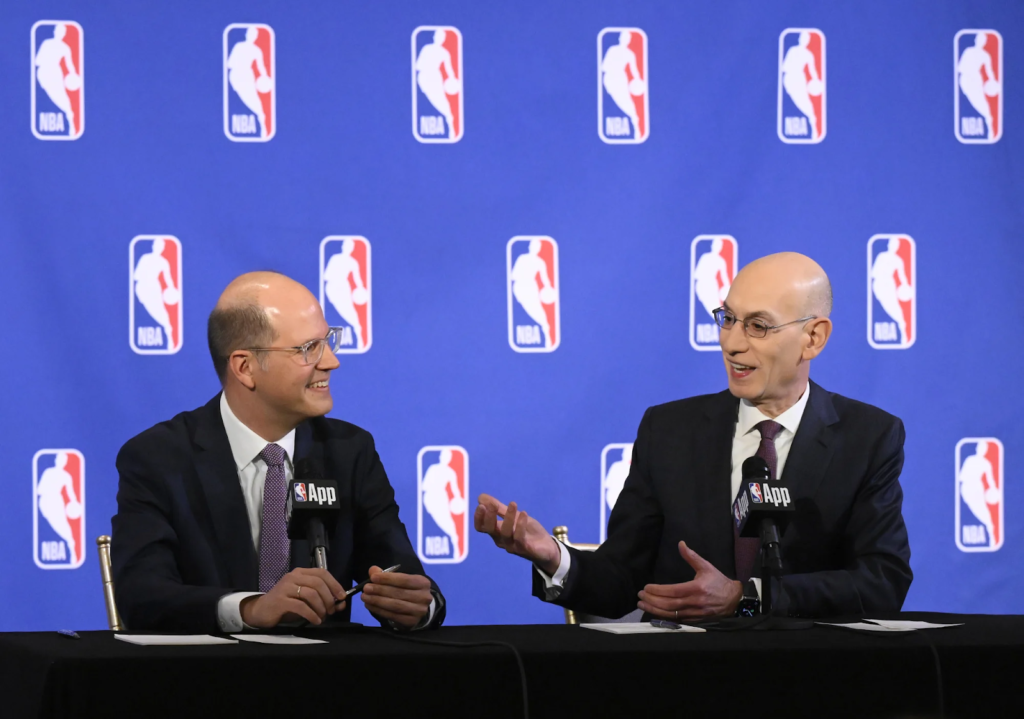
Understanding the Fundamental Difference Between NBA and FIBA
To understand why collaboration could be transformative, it’s important to clarify what separates these two organizations.
The NBA operates as a closed professional league. Teams are franchises, player contracts are tightly controlled, and revenue sharing ensures financial stability. Its goal is simple and powerful: maximize entertainment value and profitability.
FIBA, by contrast, governs international basketball. It oversees national federations, international competitions, and global rule standardization. Its mission emphasizes development, inclusion, and competitive balance across nations.
This difference in philosophy is precisely why conflicts arise—and why cooperation could unlock enormous value.
Why the Idea of a Joint League Is Gaining Momentum Now
This conversation didn’t emerge by accident. Several forces are pushing basketball toward global integration.
The International Talent Explosion
More than ever, the NBA’s biggest stars are international. Luka Dončić, Nikola Jokić, Giannis Antetokounmpo, Joel Embiid—these aren’t exceptions anymore; they’re the norm.
Fans around the world don’t just want to watch these players in the NBA. They want to see them represent their regions, cultures, and basketball systems at the highest level year-round.
The Success of NBA–FIBA Collaboration in Africa
The strongest proof that cooperation works already exists. The Basketball Africa League (BAL)—created jointly by the NBA and FIBA—has demonstrated that shared governance, localized talent, and global branding can coexist successfully.
The BAL didn’t dilute the NBA brand. It expanded it.
How a Joint NBA–FIBA League Could Actually Function
Contrary to fear-driven speculation, a joint league wouldn’t eliminate the NBA or replace domestic leagues.
Instead, the most realistic model would look like a global elite competition layered on top of existing structures.
This could include:
- NBA franchises remaining intact
- Elite international clubs qualifying into a global competition
- A unified calendar reducing schedule conflicts
- Shared revenue from global media rights
Think of it as basketball’s version of a Champions League—only bigger, faster, and more star-driven.
The Economic Upside: Why This Is About More Than Basketball
From a financial standpoint, the logic is compelling.
The NBA already generates over $10 billion annually, largely from North American markets. Meanwhile, basketball viewership is exploding internationally, particularly in Europe, Asia, and Africa.
A joint league would unlock:
- New broadcasting deals across continents
- Sponsorships from global brands
- Massive merchandise expansion
- Year-round premium content for streaming platforms
Industry analysts estimate a truly global basketball league could add billions in new annual revenue within its first decade.
Why Fans Would Benefit the Most
For fans, this isn’t about spreadsheets or governance—it’s about better basketball.
A joint league would deliver:
- Fewer meaningless exhibition games
- More high-stakes international matchups
- Clearer storylines across seasons
- Authentic global rivalries
Instead of watching stars sit out international tournaments due to NBA scheduling conflicts, fans would finally get the best players competing in the biggest moments—consistently.
Player Perspective: Opportunity Meets Caution
Players stand to gain significantly from a joint league.
Global exposure boosts endorsement value, personal branding, and long-term legacy. Competing internationally also strengthens basketball skills through diverse styles of play.
However, legitimate concerns remain:
- Increased travel demands
- Injury risk
- Contract complexity
Any joint league would need strong player protections, medical standards, and workload management baked into its foundation.
The Political and Structural Challenges
Despite its promise, a joint league faces real obstacles.
NBA owners worry about franchise valuation. European leagues fear losing identity. National federations guard their authority fiercely. Time zone logistics complicate scheduling.
Yet sports history suggests these barriers are not permanent. Soccer faced similar resistance before the Champions League became the sport’s crown jewel.
When incentives align, evolution follows.
Could This Make Basketball the World’s Most Global Team Sport?
Basketball already dominates youth culture and digital engagement. Highlights go viral instantly. Players resonate across borders.
What it lacks is a unified global professional narrative.
A joint NBA–FIBA league could change that by:
- Creating shared international storylines
- Elevating regional pride
- Synchronizing fan engagement worldwide
Basketball wouldn’t just be global in participation—it would be global in structure.
Practical Takeaways for Fans, Brands, and Media
For fans, expect more meaningful games and fewer conflicts.
For brands, this would open international sponsorship opportunities unlike anything basketball has seen.
For broadcasters and streaming platforms, a global league means premium content with built-in worldwide appeal.
The shift won’t be immediate—but momentum is undeniable.

Final Thoughts: A Defining Moment for the Sport
The idea of an NBA–FIBA joint league represents more than expansion. It represents alignment.
Alignment between talent and opportunity. Between fans and stars. Between global passion and professional structure.
If executed correctly, it could mark the most important evolution in basketball history.
The real question is no longer why this could happen—but when.
Frequently Asked Questions (SEO-Optimized)
1. What is the main difference between NBA and FIBA?
Ans. The NBA is a professional commercial league, while FIBA is the international governing body that oversees national teams and global competitions.
2. Is the NBA planning to merge with FIBA?
Ans. There is no official merger, but partnerships like the Basketball Africa League show increasing collaboration.
3. Would a joint league replace the NBA?
Ans. No. The NBA would remain intact, with a global competition layered on top.
4. How would scheduling conflicts be handled?
Ans. Through a unified calendar aligning NBA seasons with international windows.
5. Would international teams be competitive against NBA teams?
Ans. Yes. The talent gap has narrowed significantly, as seen in recent international tournaments.
6. What do NBA players think about a joint league?
Ans. Many support global expansion but emphasize health, workload, and contract protections.
7. How would this affect the Olympics and World Cup?
Ans. It could increase player availability and raise competition quality.
8. Has the NBA worked with FIBA before?
Ans. Yes, most notably through the Basketball Africa League.
9. Could this increase basketball’s popularity in the United States?
Ans. Yes, through new rivalries, storylines, and international stakes.
10. When could a joint league realistically launch?
Ans. Analysts suggest exploratory phases could begin within the next 5–10 years.