
 By Jonathan Reed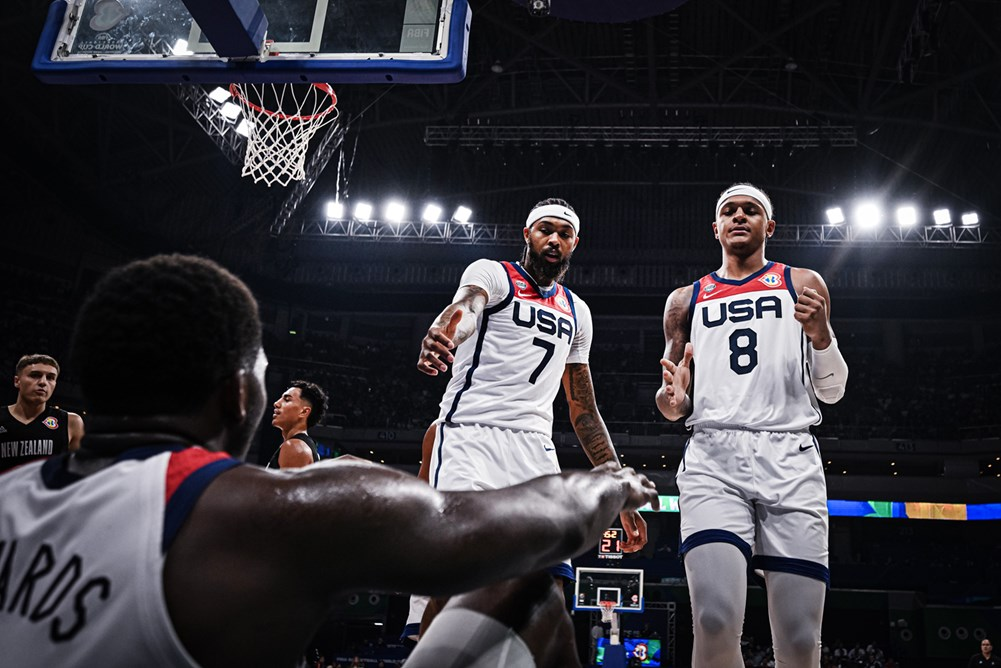
Team USA’s recent FIBA World Cup struggles have shocked fans and ignited nationwide debate. Once untouchable on the global stage, USA Basketball now faces fierce international competition, roster imbalance, and stylistic mismatches. This in-depth analysis explores what went wrong, why fans are furious, and whether this moment signals a decline—or the beginning of a new era.
Introduction: A Basketball Power Under Scrutiny
For generations, international basketball tournaments felt like formalities for American fans. When Team USA showed up, the world adjusted expectations—not the other way around. Gold medals were assumed. Dominance was expected. Anything less felt impossible.
But the mood has changed.
Following disappointing finishes at recent FIBA World Cups, fans across the United States are asking a question that once felt almost disrespectful to the sport’s history:
Is this the end of USA’s dominance in FIBA basketball?
The outrage online, on sports radio, and across social media isn’t casual frustration. It’s emotional, intense, and deeply personal. For many Americans, basketball supremacy is part of national sports identity—and that identity feels challenged.
The Legacy of USA Basketball: Why Expectations Are So High
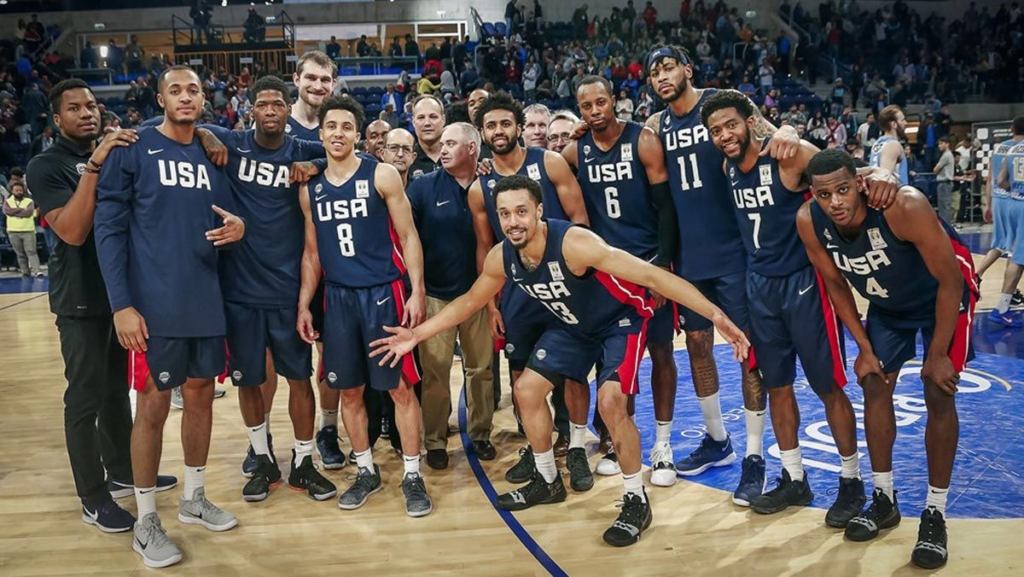
For decades, USA Basketball represented the pinnacle of the sport. From the original Dream Team to modern Olympic gold medal runs, the program set the global standard.
American dominance wasn’t just about winning—it was about how games were won:
- Overwhelming athleticism
- NBA-level shot creation
- Defensive intensity
- Unmatched depth
When Team USA stepped onto a FIBA court, the expectation wasn’t competition—it was control.
That history is exactly why recent losses sting so deeply.
What Went Wrong at the Latest FIBA World Cup?
The most recent FIBA World Cup exposed issues that had been quietly building for years.
Despite fielding talented rosters filled with NBA players, Team USA struggled with:
- Defensive consistency
- Rebounding discipline
- Late-game execution
- Chemistry under pressure
In high-stakes moments, the team often relied on isolation scoring instead of ball movement. Against disciplined international opponents, that approach failed repeatedly.
A Real-Life Example Fans Can’t Forget
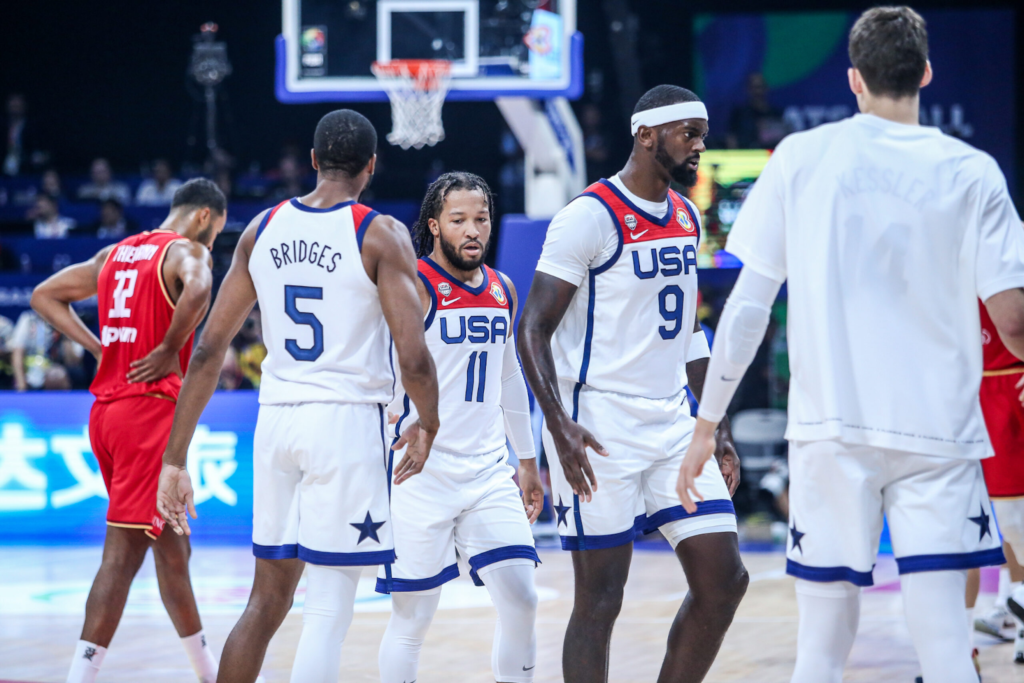
In a pivotal knockout-stage loss, Team USA surrendered critical offensive rebounds in the final minutes. The opposing team executed clean pick-and-roll actions while the U.S. defense scrambled. The result wasn’t a blowout—it was worse: a controlled, methodical defeat.
Fans weren’t just disappointed. They were stunned.
Why Fans Are Furious, Not Just Disappointed
The anger surrounding Team USA’s FIBA performances isn’t just about losing. It’s about expectation management.
American fans have grown up believing:
- NBA talent automatically translates to international wins
- USA Basketball always “turns it on” when needed
- International teams eventually break under pressure
When none of that happened, frustration turned into outrage.
Social media platforms were flooded with reactions calling out:
- Lack of effort on defense
- Poor roster construction
- Coaching decisions
- Perceived lack of national pride
This wasn’t a loss—it felt like a betrayal of tradition.
The Global Basketball Revolution Nobody Can Ignore
While American fans focus on decline, the rest of the world sees something else entirely: progress.
International basketball has evolved dramatically over the last two decades. Countries across Europe, South America, and Africa now develop players within structured systems emphasizing fundamentals, spacing, and teamwork.
Key global improvements include:
- Advanced youth development programs
- Greater exposure to NBA systems
- Long-term national team continuity
- Coaching philosophies centered on ball movement
Many international players now enter the NBA fully prepared—not as projects, but as contributors.
Why FIBA Basketball Is a Different Game
One major issue often overlooked by casual fans is how different FIBA basketball truly is.
Unlike the NBA, FIBA rules allow:
- More physical defense
- No defensive three-second violations
- Different goaltending rules
- Tighter officiating on freedom of movement
These differences punish lazy defensive habits and hero-ball possessions.
Real-World Impact
NBA scorers used to open lanes suddenly find defenders waiting. Isolation plays that work in the NBA stall in FIBA spacing. Teams that rely on talent instead of structure are exposed.
This isn’t bias—it’s basketball reality.
Roster Construction: Talent Without Balance
Perhaps the loudest criticism centers on roster selection.
Team USA consistently brings elite scorers, but often lacks:
- Defensive specialists
- Traditional rim protectors
- Physical rebounders
- Veteran international experience
This imbalance shows up late in games when possession battles decide outcomes.
International teams, by contrast, prioritize fit over fame. Every role is defined. Every lineup serves a purpose.
Talent matters—but balance wins tournaments.
Chemistry and Continuity: The Invisible Advantage
Another major difference lies in familiarity.
Many international teams play together for years—sometimes decades—across youth levels, qualifiers, and tournaments. That chemistry doesn’t show up on stat sheets, but it dominates close games.
Team USA, on the other hand, often assembles rosters weeks before competition. Even elite players need time to build trust, communication, and rhythm.
In pressure moments, cohesion beats star power.
Is This the End of USA Dominance—or a Turning Point?
History urges patience.
USA Basketball has stumbled before. In the early 2000s, international losses forced major introspection. The response was cultural reform, deeper commitment, and renewed focus—leading to one of the most dominant eras ever.
What feels different now isn’t weakness—it’s parity.
The world has caught up.
Dominance today doesn’t come from talent alone. It comes from preparation, humility, and adaptation.
What USA Basketball Must Do to Reclaim Control
If the goal is sustained global dominance, several adjustments are necessary:
- Prioritize FIBA experience during roster selection
- Commit earlier to national team continuity
- Balance scoring with defense and rebounding
- Adapt offensive schemes to international spacing
- Reinforce long-term commitment over short-term availability
None of these require reinventing basketball. They require respecting it.
What This Means for Future Olympics and Tournaments
The Olympics remain Team USA’s strongest stage, largely due to deeper rosters and longer preparation. However, recent FIBA struggles serve as clear warnings.
Gold medals are no longer automatic.
Future success will depend on how seriously lessons are applied—not how quickly losses are dismissed.
Final Takeaway: Fury Today, Focus Tomorrow
American fans have every right to be upset. Expectations were built on decades of excellence.
But frustration often precedes growth.
This moment isn’t the end of USA’s FIBA dominance—it’s the end of assuming dominance without evolution. The next chapter will be defined by how well USA Basketball adapts to a world that no longer plays catch-up.
Frequently Asked Questions (Trending Searches)
1. Is Team USA declining in international basketball?
Ans. Team USA is not declining in talent, but the competition has significantly improved, making dominance harder to maintain.
2. Why does Team USA struggle more in FIBA tournaments than the Olympics?
Ans. Olympic teams usually feature more superstars and longer preparation time, while FIBA rosters often lack continuity.
3. Has the rest of the world caught up to American basketball?
Ans. Yes, international player development and coaching systems have closed the gap considerably.
4. Do NBA players take FIBA tournaments seriously?
Ans. Many do, but scheduling conflicts and physical demands limit participation from top stars.
5. Is coaching the main reason for Team USA’s struggles?
Ans. Coaching plays a role, but roster balance and chemistry are larger factors.
6. Why do FIBA rules affect Team USA so much?
Ans. FIBA’s physical style and spacing punish isolation-heavy offenses and defensive lapses.
7. Will Team USA dominate again in the future?
Ans. Very likely, but dominance will require adaptation rather than reliance on talent alone.
8. Are international teams better coached than Team USA?
Ans. They often benefit from long-term system continuity, which is crucial in short tournaments.
9. Why are fans so angry about FIBA losses?
Ans. Because global basketball dominance is deeply tied to American sports identity.
10. What is the biggest lesson from recent FIBA failures?
Ans. Respect the opponent, respect the format, and prepare accordingly.