
 By Hannah Wright
Plus/minus has long been treated as basketball’s ultimate truth, but it often hides more than it reveals. A growing body of analytics shows that assist-to-turnover ratio predicts wins far more reliably. This in-depth article explains why decision-making beats raw point differential, how this stat exposes control under pressure, and why elite teams quietly rely on it when games are decided.
Introduction: The Stat Everyone Quotes—And Why It Keeps Letting Us Down
In modern basketball conversations, few numbers carry as much authority as plus/minus.
It’s clean. It’s simple. It sounds definitive. When a player is on the floor, did the team outscore the opponent or not? Broadcasters flash it on screens. Fans argue over it online. Analysts use it to crown heroes and assign blame.
But here’s the uncomfortable reality: plus/minus is one of the most misunderstood and misused stats in basketball.
Across NBA games, college matchups, playoff series, and even international competitions involving programs linked to USA Basketball, there is another stat that consistently predicts game outcomes better—often before the scoreboard makes it obvious.
That stat is assist-to-turnover ratio.
And once you understand why, you’ll never watch a game the same way again.
Why Are Fans Asking: “Is Plus/Minus Actually Reliable?”
Search behavior tells us something important: fans are starting to doubt the numbers they’ve been told to trust.
Common questions Americans are asking include:
- Why does a player with great plus/minus look terrible on the court?
- Why do stars sometimes have negative plus/minus in wins?
- Is there a stat better than plus/minus?
- What metric actually predicts who wins basketball games?
These questions aren’t casual curiosity. They’re reactions to a stat that’s easy to quote—but dangerously misleading when used alone.
Plus/minus explains what happened.
It rarely explains why it happened.
What Plus/Minus Really Measures (And What It Completely Ignores)
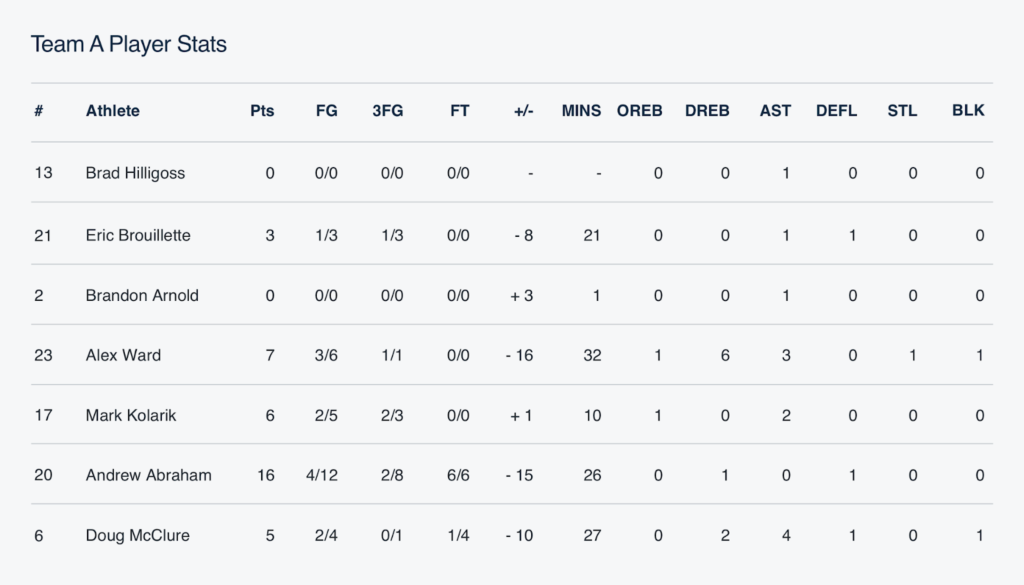
At its core, plus/minus tracks one thing: point differential while a player is on the floor.
That’s all.
It does not reliably account for:
- Who else was on the court
- Strength of opponents faced
- Shooting luck (hot or cold streaks)
- Garbage-time distortions
- One teammate’s defensive mistake
A player can make smart decisions all night and post a bad plus/minus. Another can make poor reads and look elite simply because shots happened to fall.
That’s not predictive power. That’s context blindness.
The Stat That Quietly Predicts Wins: Assist-to-Turnover Ratio
Assist-to-turnover ratio (A/T ratio) measures something far more fundamental than point differential.
It captures:
- Decision-making quality
- Offensive control
- Ball security under pressure
- Whether a team is creating advantages or gifting possessions
Basketball games are won and lost on possessions. A/T ratio tells you who is respecting them.
When this number tilts strongly in one direction, the final score almost always follows.
Why Assist-to-Turnover Ratio Beats Plus/Minus
Plus/minus reacts after points are scored.
Assist-to-turnover ratio predicts whether points are about to happen.
That difference matters.
What A/T Ratio Reveals That Plus/Minus Hides
- Whether offense is sustainable
- Whether players are reading defenses correctly
- Whether pressure is causing mistakes
- Whether the team is in control or scrambling
You can’t fake good decision-making for 48 minutes.
Real-Life Example: When Plus/Minus Lies to You
Fans see this scenario constantly.
A bench player posts +15 in limited minutes because:
- He shared the floor with a hot lineup
- Opponents missed open shots
Meanwhile, a starting guard finishes with -4 while:
- Orchestrating the offense
- Creating open looks
- Keeping the team organized
Plus/minus blames the wrong player.
Assist-to-turnover ratio doesn’t.
The Moment Games Actually Turn: Turnover Runs
Watch close games carefully.
They rarely swing on one spectacular shot. They swing on clusters of bad decisions:
- A lazy entry pass
- A forced drive into traffic
- A rushed skip pass
Within two minutes, a tie game becomes a 10–2 run.
Assist-to-turnover ratio spikes—or collapses—before the scoreboard tells the story.
Why Coaches Obsess Over This Stat (Even If Fans Don’t)
Coaches rarely argue about assist-to-turnover ratio on television. They don’t need to.
Inside locker rooms and film sessions, this stat answers the most important question in basketball:
“Are we beating ourselves?”
Most losses are not caused by bad shooting nights. They’re caused by poor decisions under pressure.
A/T ratio exposes that instantly.
Playoff Basketball: Where Plus/Minus Fully Breaks Down
In the playoffs:
- Rotations tighten
- Matchups are exploited
- Variance decreases
Plus/minus becomes noisier because every possession carries more weight.
Assist-to-turnover ratio becomes brutally predictive.
Teams that win playoff series almost always:
- Assist on more made baskets
- Commit fewer live-ball turnovers
- Control tempo and pace
This pattern repeats year after year.
The Possession Truth Casual Fans Miss
Basketball is a possession game disguised as a scoring game.
Every turnover:
- Removes a scoring opportunity
- Often creates an easy one for the opponent
Every assist:
- Signals advantage creation
- Reflects defensive breakdowns
Assist-to-turnover ratio measures possession quality. Plus/minus measures possession aftermath.
Why This Stat Predicts Close Games Best
In blowouts, almost everything works.
In close games:
- Defenses tighten
- Reads slow down
- Pressure rises
That’s when:
- Turnovers increase
- Forced shots appear
- Ball movement stalls
Teams with superior A/T ratio consistently close games better—even when shooting percentages are nearly identical.
What the Data Keeps Showing—Year After Year
Across leagues, seasons, and competition levels, the same pattern appears:
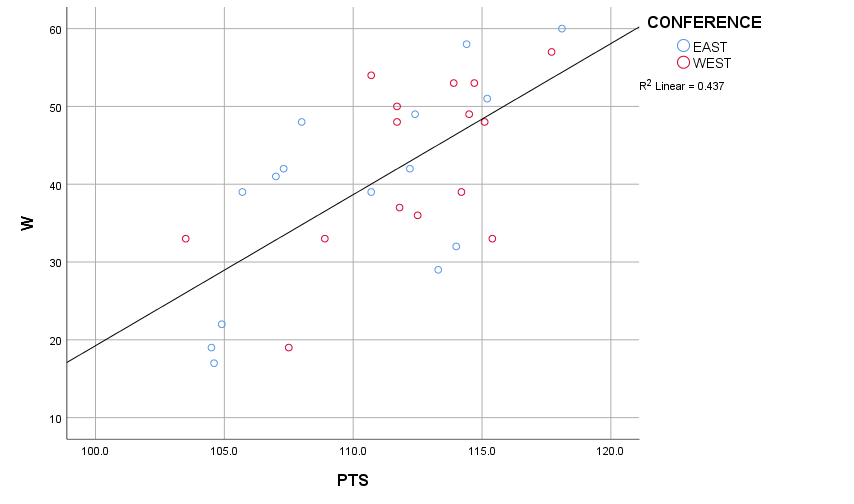
- Teams with higher A/T ratio win more often
- Late-game A/T ratio strongly correlates with clutch success
- Championship teams almost always rank near the top in ball-security metrics
Plus/minus fluctuates wildly. Decision-making does not.
Why Fans Feel This Stat Without Naming It
Fans say things like:
- “We’re playing sloppy.”
- “They’re rushing everything.”
- “We’re giving the game away.”
They’re describing assist-to-turnover problems—even if they don’t use the term.
The eye test aligns with this stat more than almost any advanced metric.
What This Means for Player Evaluation
This is where assist-to-turnover ratio becomes uncomfortable.
It exposes:
- Ball-dominant players who stall offense
- “Scorers” who hurt efficiency
- Players whose mistakes outweigh their highlights
It rewards:
- Calm under pressure
- Quick processing
- Team-first reads
Impact isn’t always loud. This stat proves it.
Practical Takeaways for Fans, Coaches, and Analysts
- Stop judging games by raw plus/minus
- Watch turnover clusters, not just scoring runs
- Track ball movement under pressure
- Respect players who protect possessions
Winning basketball is disciplined basketball.
Frequently Asked Questions (Trending Search Queries)
1. What stat predicts basketball wins better than plus/minus?
Ans. Assist-to-turnover ratio consistently outperforms plus/minus as a predictor.
2. Why is plus/minus misleading?
Ans. It’s heavily influenced by lineup context and shooting variance.
3. Is assist-to-turnover ratio better than PER?
Ans. For predicting wins, yes—because it measures decision-making.
4. Do elite teams always have a strong A/T ratio?
Ans. Almost always, especially in playoff settings.
5. Why do turnovers matter more than missed shots?
Ans. Turnovers remove your chance to score and often create opponent points.
6. Can one player hurt team A/T ratio badly?
Ans. Yes. Poor ball-handling can swing games quickly.
7. Does this stat apply to college basketball?
Ans. Even more so—college games are extremely turnover-sensitive.
8. Is assist-to-turnover ratio crucial late in games?
Ans. Yes. Close games are decided by possession control.
9. Why don’t broadcasts emphasize this stat more?
Ans. It’s less flashy than scoring-based metrics.
10. Should fans ignore plus/minus completely?
Ans. No—but it should never be used in isolation.
Final Verdict: The Game Is Decided Before the Scoreboard Shows It
Plus/minus tells you what happened.
Assist-to-turnover ratio tells you why it happened—and what’s likely to happen next.
Basketball outcomes are decided by decisions, not just shot-making. The teams that protect the ball, move it intelligently, and create advantages win far more often than the scoreboard alone suggests.
The most predictive stat in basketball isn’t glamorous.
It’s honest.
And once you start tracking it, the game finally makes sense.