
 By Brandon Lewis
Modern NBA defense isn’t worse than it used to be—it’s more complex, strategic, and rule-constrained. This deep-dive breaks down the ten biggest misconceptions fans have about today’s defense, explaining why scoring is up, why stars still struggle, and how elite defenses now operate quietly in the background. If you think defense is dead, this article will change how you watch the game.
Introduction: Why “Nobody Plays Defense Anymore” Is the Wrong Take
Few phrases are repeated more during an NBA broadcast than this one:
“Nobody plays defense anymore.”
When teams regularly score 120 points and superstars make difficult shots look routine, it’s easy to assume defense has vanished. Compared to the grind-it-out games of the 1990s or early 2000s, today’s NBA can feel offense-heavy, permissive, and chaotic.
But here’s the reality most fans miss: NBA defense has never been more sophisticated than it is right now.
What changed isn’t effort—it’s rules, spacing, offensive skill, and the math of basketball. Modern defenders are asked to solve impossible problems every possession. Understanding those challenges requires letting go of outdated assumptions.
Let’s break down the ten biggest things fans consistently get wrong about modern NBA defense.
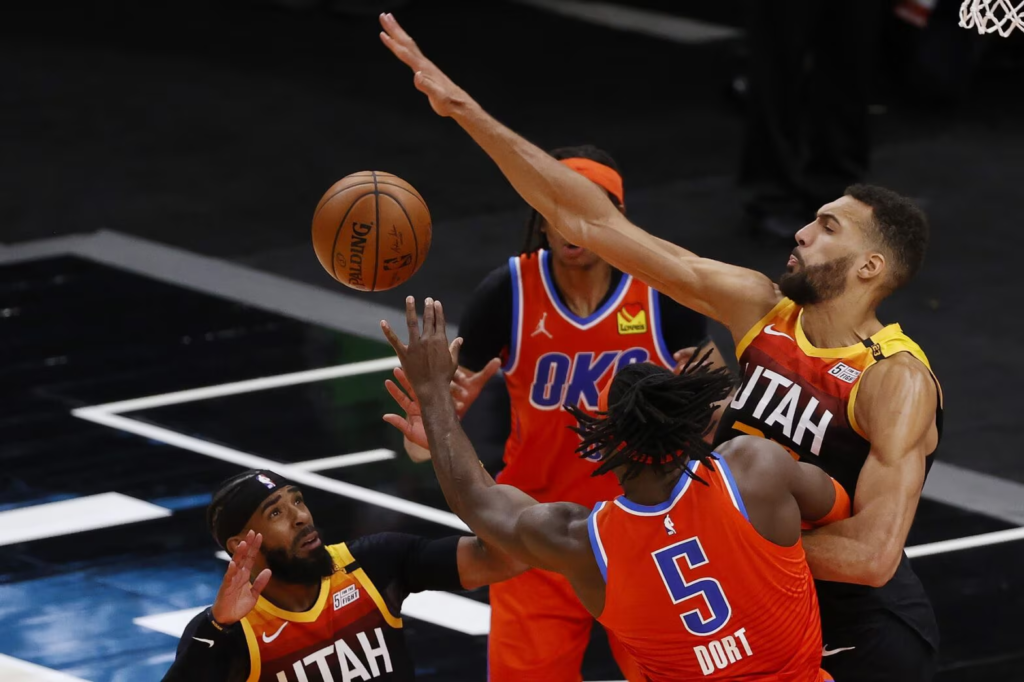
1. High Scores Mean Defense Is Bad
This is the most common misconception—and the most misleading.
High scoring does not automatically mean poor defense. It means offenses are historically efficient. The three-point shot alone has permanently changed scoring math. A well-defended possession can still end with a made three simply because the shot is worth more.
Modern defenses aim to:
- Limit shots at the rim
- Take away corner threes
- Force contested pull-ups
When teams still score, it’s often because they took good shots under pressure, not because defenders failed.
Scoring inflation reflects offensive evolution, not defensive laziness.
2. Defense Was Tougher “Back in the Day”
Defense looked tougher because the rules allowed it to be.
In earlier eras, defenders could:
- Hand-check ball-handlers
- Grab cutters
- Body drivers without immediate whistles
Today’s defenders operate under freedom-of-movement rules designed to protect players and increase flow. That means less physical contact—but far more footwork, anticipation, and discipline.
Staying in front of elite athletes without using your hands is harder than most fans realize. Modern defense is finesse, not force.
3. NBA Stars Don’t Care About Defense
This belief ignores how modern stars manage energy.
Stars today don’t defend recklessly for 48 minutes. Instead, they pick moments. Late rotations, help defense, and clutch possessions matter more than constant ball pressure.
Players like Giannis Antetokounmpo and Jayson Tatum conserve energy early so they can impact winning plays late. Their defensive value often appears in positioning, not highlight steals.
Defense is strategic, not nonstop effort.
4. Switching Means Defenders Are Lazy
Switching is one of the most misunderstood defensive concepts.
Fans often think defenders should fight over every screen. In reality, modern offenses run so many ball-screens that fighting over each one creates chaos and breakdowns.
Switching works because it:
- Maintains spacing integrity
- Reduces miscommunication
- Keeps defenders connected
Elite defenders like Draymond Green thrive because they communicate, anticipate actions, and neutralize advantages before they form.
Switching isn’t weakness—it’s survival.
5. Great Defense Equals Steals and Blocks
This misconception hides elite defenders in plain sight.
The best defenders don’t gamble. They don’t chase highlights. They quietly erase options.
Great defense often looks like:
- Cutting off a drive before it starts
- Forcing an early pass
- Making a shooter hesitate
- Being in the correct help position
Advanced metrics increasingly value on/off defensive impact and shot quality allowed. Steals and blocks are bonuses—not indicators of defensive excellence.
6. Zone Defense Is a Cop-Out
Zone defense used to signal weakness. Today, it’s a weapon.
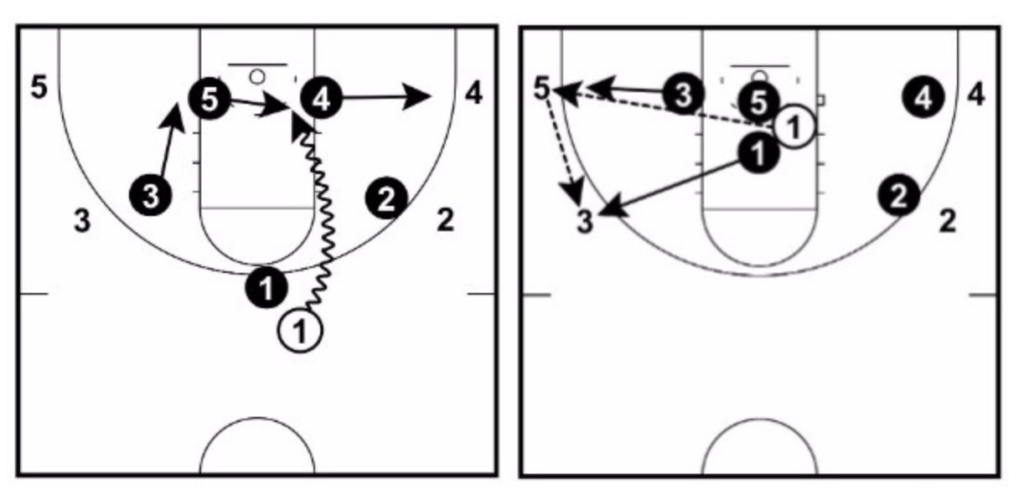
Modern NBA zones are fluid, hybrid systems that blend man and zone principles. Teams use them to:
- Protect weaker defenders
- Disrupt offensive rhythm
- Force ball movement
Zones aren’t played because teams can’t defend man-to-man—they’re played because offenses are too skilled to guard traditionally for 48 minutes.
7. If Defense Was Good, Stars Wouldn’t Score So Easily
This idea ignores modern spacing and shooting skill.
When Stephen Curry pulls defenders 30 feet from the basket, he breaks defensive geometry. Even perfect rotations can’t cover that space consistently.
Modern defense is about damage control:
- Force tougher shots
- Limit efficiency
- Prevent runs
Stopping stars entirely is unrealistic. Containing them is the goal.
8. Defense Is Just About Effort
Effort matters—but effort without structure fails.
Modern NBA defense requires:
- Communication across five players
- Pre-switching
- Early help positioning
- Discipline against bait plays
One defender freelancing can collapse an entire scheme. Coaches prioritize discipline and trust over individual hustle.
Defense today is collective intelligence.
9. Modern Players Wouldn’t Survive Old-School Defense
This argument ignores context.
Old-school defenders benefited from rules that allowed physicality. Modern defenders benefit from rules that reward movement and skill.
Players adapt to their environments. Put modern athletes in old rules and they’d adjust. Put older stars in today’s spacing and they’d have to adjust too.
Every era produces defenders suited to its conditions.
10. Defense Doesn’t Matter Anymore
This is simply false.
Championship teams still rank among the league’s best defensively. The difference is how defense shows up.
Modern elite defenses:
- Protect the rim without fouling
- Take away corner threes
- Communicate flawlessly
- Adjust on the fly
Defense still wins—it just looks quieter and smarter.
Why Fans Struggle to See Modern Defense
Defense today often happens before the ball arrives.
It’s visible in:
- Rotations half a second early
- Passing lanes closed
- Drives discouraged entirely
These plays don’t appear in box scores or highlight reels. Fans watching the ball miss what defenders prevent.
A Real-World Example: Why 120 Points Doesn’t Mean Failure
A team allowing 120 points can still play elite defense if:
- They force inefficient shot profiles
- They avoid fouling
- They limit transition chances
Context matters more than totals. Defense is about process, not just results.
What Modern NBA Defense Actually Prioritizes
- Shot quality suppression
- Decision-making pressure
- Communication and trust
- Positional versatility
- Scheme discipline
This is chess, not street fighting.
Key Takeaways (Quick Read)
- High scores ≠ bad defense
- Rules reshaped defensive technique
- Switching is strategic
- Steals don’t define greatness
- Defense is collective
- Elite defense still wins championships
Frequently Asked Questions (FAQ)
1. Is NBA defense really worse today?
Ans. No. It’s more complex and rule-restricted, not worse.
2. Why are NBA scores so high now?
Ans. Offensive efficiency, spacing, and three-point shooting drive scoring.
3. Do modern stars care less about defense?
Ans. No. Defensive effort is more situational and strategic.
4. Why don’t players hand-check anymore?
Ans. Rule changes eliminated hand-checking to promote movement and safety.
5. Is switching bad defense?
Ans. No. It’s a necessary adaptation to modern offenses.
6. Why don’t steals and blocks show real defense?
Ans. Positioning and deterrence matter more than highlights.
7. Are zone defenses a sign of weakness?
Ans. No. Modern zones are advanced tactical tools.
8. Would modern players survive older NBA eras?
Ans. Yes. They would adapt just like players always have.
9. Does defense still win championships?
Ans. Absolutely. Elite defenses remain critical to titles.
10. How should fans judge defense today?
Ans. By shot quality, rotations, communication, and team impact—not just points allowed.
Final Thoughts
Modern NBA defense isn’t dead—it’s misunderstood.
What looks like chaos is coordination. What seems soft is adaptation. What feels like poor defense is often elite offense meeting disciplined resistance.
Defense didn’t disappear.
It evolved.
And once fans learn what to look for, today’s NBA becomes far more impressive—not less.